EGO SNT2110 Shuts Off Under Load or Flashes Orange: Overload vs Heat
An exact SNT2110/SNT2110-FC shutdown path that separates a flashing-orange overload from a solid-orange overheat condition before blaming the batteries or motor.
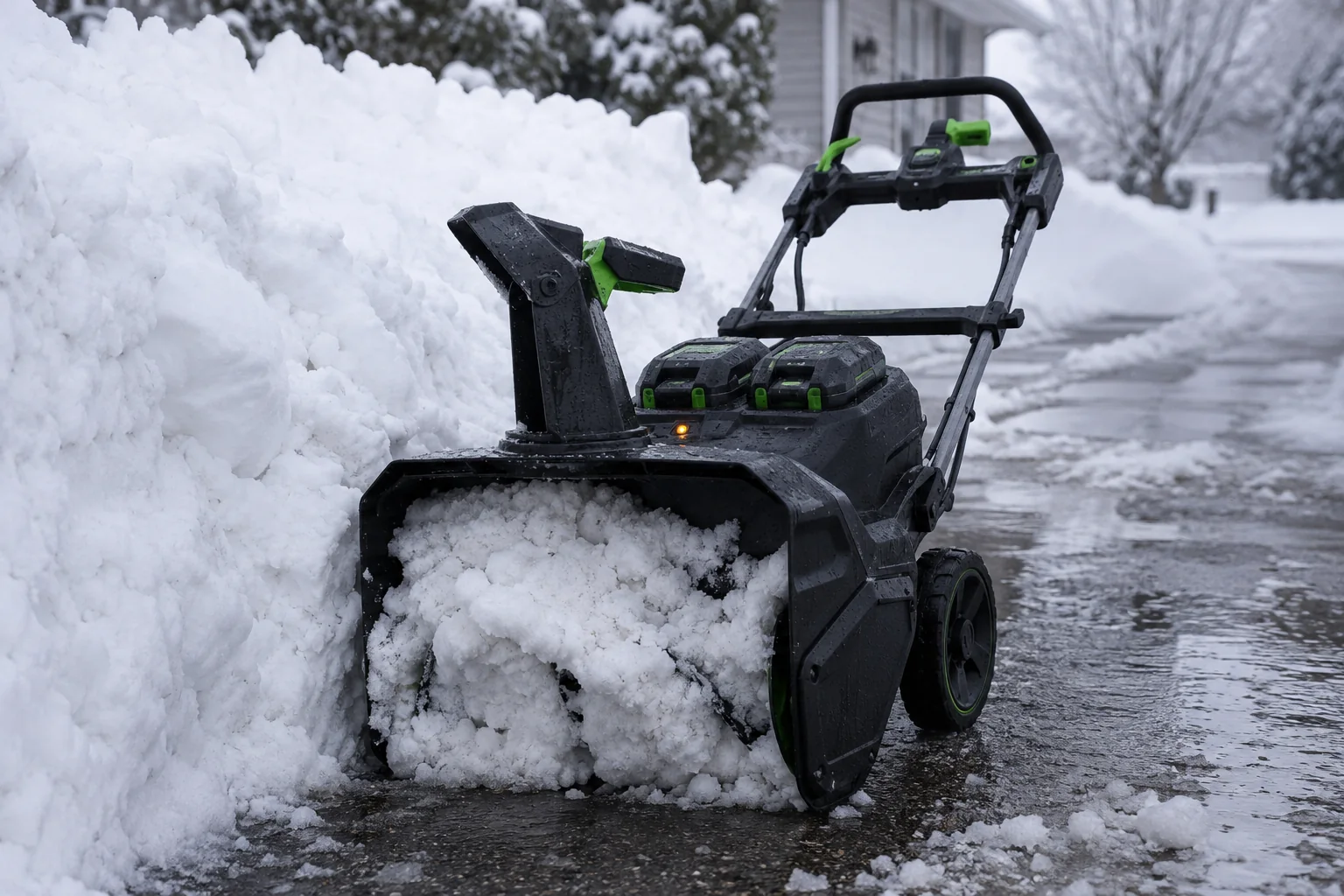
Applies to SNT2110 / SNT2110-FC
Identifiers: SNT2110 · SNT2110-FC
Guide scope: Applies to EGO SNT2110 / SNT2110-FC under the official EGO operator manual. Read the power-indicator state before clearing the auger or replacing battery/motor parts.
EGO operator manual troubleshooting table is specific to SNT2110/SNT2110-FC.
Load trip vs. standing indicator
Use this page when the machine runs and then shuts down under load with the flashing-orange protection behavior. A red/orange indicator present before a load event belongs to the separate indicator-state page.
On the SNT2110, flashing orange is the overload branch: reduce snow load and clear a jam with the batteries removed. Solid orange is a heat branch: stop and let the machine or battery pack cool. Those states should not be diagnosed as the same failure.
Release the bail and remove both battery packs before clearing packed snow or ice. Never reach into the auger/deck, bypass the overload/temperature protection, or keep restarting a machine that repeatedly shuts down under the same load.
Diagnostic sequence
Work in order. The early checks are intentionally low-disassembly and model-specific; stop once the symptom changes or the fault is confirmed.
Read the indicator before resetting anything
Why this check: EGO assigns different meanings to solid orange and flashing orange, so the light state is diagnostic evidence.
What to do: Note whether the power indicator is solid orange or flashing orange before removing batteries or allowing the condition to clear.
Flashing orange: treat it as overload first
Why this check: The manual says overload can reduce motor speed and then shut the motor off if the load continues.
What to do: Remove the battery pack(s), inspect the auger/deck for packed snow or ice with a clean-out tool, reinstall the batteries, then retry with a slower pace or narrower clearing swath.
Solid orange: let heat protection reset normally
Why this check: EGO uses solid orange when the snow blower or a battery pack is overheated.
What to do: Stop operation and let the machine/battery pack cool in a safe location. Do not cool a hot battery with water or force repeated restarts.
Compare one-battery use with snow depth and condition
Why this check: EGO specifically warns that using a single battery in deeper, very wet or icy snow can trigger high-temperature shutdown.
What to do: If compatible packs are available and the manual permits the configuration, use the intended battery setup and reduce snow depth/load rather than assuming a defective motor.
Persistent shutdown in light snow = service boundary
Why this check: A repeatable stop with a clear auger, cool packs and modest load no longer fits the normal protection path.
What to do: Preserve the indicator state and battery observations and use EGO service support instead of bypassing sensors or replacing several parts at once.
How to read this symptom on this model
The SNT2110 gives you unusually useful evidence before the machine resets: a flashing-orange power indicator is the overload branch, while a solid-orange indicator is the temperature branch. Keep those two observations separate. An overload often follows packed snow, ice, an aggressive clearing pace or too much swath width; an overheat condition calls for cooling rather than repeated restarting. Treating every orange light as a failed battery throws away the diagnostic information EGO built into the machine.
Also listen for what happens just before the stop. EGO describes the motor reducing speed when overload is detected before a full shutdown occurs. A slowdown that improves when you narrow the cut is consistent with load management; an immediate repeat shutdown in light snow with a clear auger and cool battery packs is different evidence and deserves service-level diagnosis.
Battery high-temperature protection has its own threshold in the SNT2110 manual: if battery temperature exceeds 158°F (70°C), the protection circuit shuts the snow blower off. EGO directs the user to release the bail and wait for the overheated battery pack to cool until its flashing-orange indication returns to green before restarting. The manual also warns against relying on a single battery when accumulated snow exceeds 3 inches or is very wet or icy, and recommends two batteries working together for peak power.
Treat any shutdown that follows a jam as a separate safety event before evaluating the indicator again. EGO's SNT2110 procedure requires the motor and auger to be off, the battery pack or packs removed, a wait for the auger to stop, and use of the clean-out tool rather than a hand. Only after the snow path is physically clear and the packs have returned to a normal temperature should the next light state be interpreted. A flashing-orange overload that disappears under a narrower pass is different evidence from an orange condition that returns immediately with a free auger and modest load.
Flashing orange is most useful when tied to the exact moment it appears. If the light begins during a dense, wide pass and the machine recovers after the auger path is cleared and the load is reduced, overload protection is the stronger explanation. If the same shutdown occurs in a light pass with no packed snow, preserve that difference; the symptom has moved beyond ordinary snow load and deserves a different service decision.
Battery temperature should be evaluated separately from mechanical overload. A pack that has become hot can require time to return to its normal operating range, while an auger packed with ice will remain a physical load even after the battery cools. Remove the packs before clearing the housing, let temperature protection reset normally, then retry with a narrower swath. Persistent shutdown after both conditions are controlled is stronger evidence for service than repeatedly resetting the machine in the same heavy snow.
After an overload trip clears, change only the snow load on the next pass. Keep the same batteries and auger-speed setting, then take a narrower bite or slower feed through ordinary snow. If flashing orange no longer returns, the protection event was consistent with excess mechanical load. If it repeats quickly with a clear auger and modest snow, record battery charge, pack temperature and the exact indicator state before service. That comparison is more useful than swapping batteries, changing auger speed and changing snow depth at the same time, because several simultaneous changes can make a normal protection reset look like an intermittent electrical fault.
Before you order parts
Do not order a motor, controller or battery simply because the machine shut down under heavy snow. First capture the light state, remove the battery packs, clear the auger/deck safely and repeat the test at a slower pace or narrower swath. If a solid-orange heat condition was present, allow a full cool-down first. Parts become more plausible only when the protection condition repeats under modest load with a clear mechanism and known-good operating conditions.
If a shutdown occurs only with one pack in deeper or wet/icy snow, correct the battery configuration and load before labeling the battery defective. After a heat-protection event, slow the pace and narrow the clearing swath on the next pass; immediately recreating the same load before the pack has cooled defeats the protection test and can make a normal thermal response look like a persistent fault.
Back to the exact model hub →Retest without creating a second problem
Reinstall the battery packs only after the auger/deck is clear and any heat condition has reset. Make a short pass in lighter snow or at reduced width and watch the indicator. If the machine again slows or flashes orange, stop and reduce load rather than forcing it. If it shuts down in light conditions with no jam and normal temperature, preserve the exact indicator behavior for EGO service.
Repeat the comparison only after the battery LEDs and machine indicator have returned to their normal state. Use the same known-clear auger path but change one load variable at a time—pace or swath width, not both. A protection event that disappears when load is reduced supports the overload branch; a shutdown that returns under light load with cool packs and a clear auger is the point to stop field testing and carry the exact light pattern to EGO support.
Model-specific notes
- A brief motor-speed drop before shutdown is part of EGO’s overload behavior and is useful evidence.
- Battery state-of-charge lights and the snow-blower power indicator answer different questions; record both if the problem repeats.
Questions people get wrong on this model
Does flashing orange mean the battery is bad?
Not by itself. On SNT2110/SNT2110-FC, flashing orange is the overload branch; inspect for packed snow/ice and reduce the clearing load first. Remove the battery pack(s), inspect the auger/deck for packed snow or ice with a clean-out tool, reinstall the batteries, then retry with a slower pace or narrower clearing swath.
Why does it shut off only in wet heavy snow?
Heavy, wet or icy snow raises the load and heat demand. EGO specifically tells users to slow down, narrow the swath and avoid relying on one battery in heavier conditions. EGO specifically warns that using a single battery in deeper, very wet or icy snow can trigger high-temperature shutdown.
Does an orange indication under load automatically mean the battery needs replacement?
No. On the SNT2110, indicator state and load history matter. Overload or temperature protection can reset after the snow path is cleared, load is reduced and the pack returns to a normal temperature; persistent shutdown in light load is different evidence. EGO assigns different meanings to solid orange and flashing orange, so the light state is diagnostic evidence.
Primary-source trail
Manufacturer material used for this diagnosis. Verify the model/serial range before ordering parts or applying an adjustment.
EGO SNT2110/SNT2110-FC Operator ManualOfficial troubleshooting table for battery, frozen auger, drive belt and scraper conditions.egopowerplus.com →EGO SNT2110 steel-auger product pageOfficial product identity for the SNT2110 platform, including the two-56V-battery architecture and supported accessories.egopowerplus.com →EGO product supportOfficial support path for manuals, service help and model-specific support when external checks do not resolve the fault.egopowerplus.com →EGO 56V battery informationOfficial battery-system information used as a companion source for battery state, temperature and pack-handling boundaries.egopowerplus.com →