Ariens Deluxe 24 921069 Not Throwing Snow or Throwing Weakly
A discharge-specific checklist for the 921069 that distinguishes a clogged chute from auger-drive and operating-speed problems.
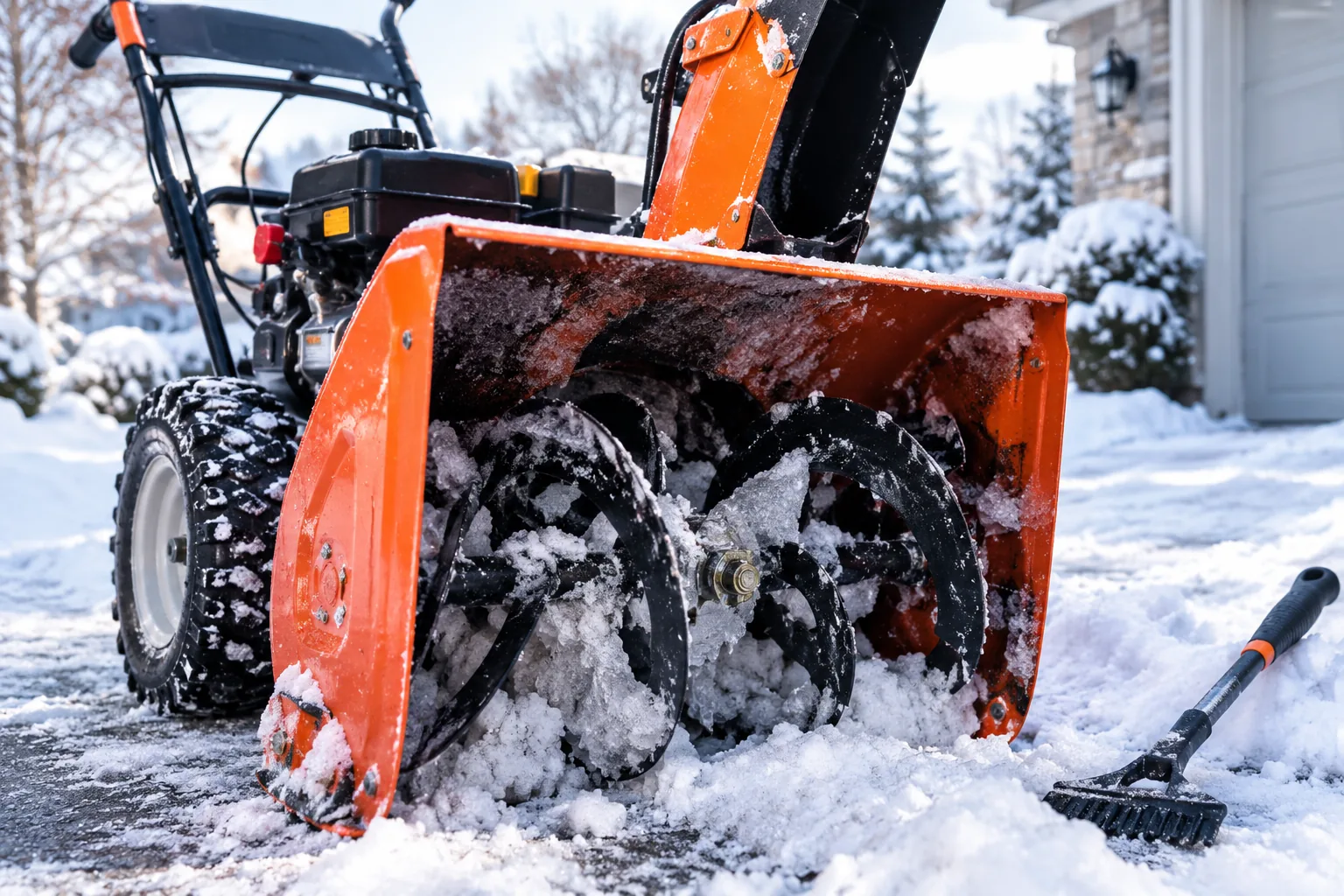
Applies to Deluxe 24 (921069)
Identifiers: 921069 · Deluxe 24
Engine ID: Ariens AX 252cc current specification — verify engine label for parts
Guide scope: Applies to Ariens Deluxe 24 model 921069, serial 000101+, under operator manual 30219300A. Keep this discharge symptom separate from legacy 921024/921045 and from a pure engine low-power complaint.
Operator manual 30219300A identifies model 921069 serial 000101+. Current Ariens product data lists AX 252cc; keep the serial number and engine label with the machine before engine-specific parts.
The manual calls out chute clogging, auger obstruction, belt/cable problems and incorrect throttle position. Start with shutdown and a visual clog check.
Shut down, remove the key, wait for the auger/impeller to stop and use the clean-out tool only.
Diagnostic sequence
Work in order. The early checks are intentionally low-disassembly and model-specific; stop once the symptom changes or the fault is confirmed.
Discharge chute
Why this check: Packed wet snow can stop discharge even when the auger system is intact.
What to do: Clear the chute and auger housing with the clean-out tool after full shutdown.
Auger and impeller movement
Why this check: Snow cannot reach or leave the chute if the intake/impeller is not rotating correctly.
What to do: Look for a broken shear bolt, ice or foreign object before suspecting engine power.
Belt and attachment cable
Why this check: A belt can slip under load and still appear to move with no snow present.
What to do: Inspect for wear/slip and verify attachment control adjustment to manual spec.
Throttle position
Why this check: Ariens lists an incorrect throttle position as a cause of poor snow discharge.
What to do: Operate in the manual-specified FAST position when throwing snow.
Snow condition and pace
Why this check: Heavy wet snow can overload discharge capacity.
What to do: Take narrower bites and allow the machine to clear between passes rather than forcing travel speed.
How to read this symptom on this model
A machine that runs but throws poorly is not automatically suffering from an engine problem. On the 921069, discharge depends on an open chute, a free auger/impeller, an attachment drive that is transmitting power, and the engine being operated at the intended speed. A packed chute can stop discharge while everything upstream still turns; a belt or cable problem can produce the opposite pattern, where the chute is clear but the impeller never reaches useful speed.
Snow condition also matters. Heavy wet snow and trying to clear too much width at once can overwhelm an otherwise functional machine. That is why this guide separates a repeatable mechanical weakness in ordinary snow from a one-off loss of throw in unusually wet or deep conditions.
The 30219300A troubleshooting table gives this exact 921069 complaint a defined order of probable causes: broken shear bolts; attachment clutch/brake adjustment; a frozen impeller; ice or debris obstructing the auger; a chute clogged with snow; an auger-drive belt that is slipping, worn or damaged; and the throttle control in the wrong position. Keeping those branches explicit prevents a vague ‘not throwing’ page from becoming a carburetor article.
Use what still moves to split the problem. One auger section that no longer transfers torque after an impact is consistent with a shear-bolt event. An attachment that will not turn at all after wet snow freezes inside the housing fits the frozen-impeller/obstruction branches. A clear housing with attachment motion that fades under load gives the belt/control path more weight. These are observations, not permission to reach into a running housing.
The attachment clutch/brake branch deserves caution because safe stopping and adequate engagement are linked. The manual does not tell the operator to keep tightening until throw distance improves. If the attachment does not engage correctly—or does not stop correctly after release—use the matched adjustment/service procedure and restore both functions before returning to snow.
Throttle position is the last listed owner-visible branch in the row, not a workaround for a clog. The manual calls for FAST when throwing snow. If a machine suddenly stops discharging with the chute packed, increasing throttle is not the diagnostic test; shutdown and clean-out comes first. Once the path is clear, a consistent FAST setting makes the light-load retest meaningful.
Do not merge this symptom with the separate 921069 ‘excessive snow left behind’ row. Ariens assigns the left-behind condition to scraper-blade wear/damage. A machine can throw snow normally and still leave a layer because the scraper is not contacting/clearing correctly. That separate article keeps a scraper problem from being misdiagnosed as an auger-belt problem.
Use the discharge pattern to separate a flow restriction from a drive problem. A chute that packs suddenly in wet snow can produce almost no throw while the auger system is still healthy; a clear chute with one auger section inactive points back toward shear hardware or a jam. If both auger sections and the impeller move but the snow stream collapses only under load, belt slip or attachment-control transfer becomes more credible. That progression is more useful than replacing a belt simply because throw distance is short.
Use the impeller observation to keep a complete no-discharge complaint separate from a weak-distance complaint. With the machine shut down before inspection, first clear the chute and housing. During the later safe operator-position retest, note whether snow reaches the impeller and whether the discharge stream exists at all. No stream with one auger section inactive supports shear/attachment-drive evidence; a stream that exists but collapses under heavier feed belongs closer to belt transfer, operating load or the separate weak-throw lane. Keeping “nothing comes out” distinct from “it throws, but not far” is especially important on the 921069 because otherwise the same parts can be blamed for two mechanically different symptoms.
Before you order parts
Do not replace the auger belt until you have confirmed the discharge path is clear and watched the attachment response from a safe position. Likewise, do not keep increasing engine speed to compensate for a clog. Record whether the impeller spins strongly with no load, whether one auger section is inactive, and whether the symptom started immediately after a jam or object strike; those details narrow the repair far more than “doesn’t throw.”
Before ordering an auger belt, confirm the exact 921069 identity/serial scope, inspect the shear-bolt positions, rule out frozen or obstructed auger/impeller parts, and clear the chute with the clean-out tool. If the symptom began immediately after an impact, preserve that history because it changes the probability of shear/obstruction damage.
Do not buy clutch parts merely because throw distance is poor. First check whether the attachment engages and stops correctly, then compare the cable/brake condition with the matched service procedure. A no-load attachment that spins normally but slips under a modest snow load is stronger belt/control evidence than a machine that cannot turn because the impeller is frozen.
Back to the exact model hub →Retest without creating a second problem
After clearing or correcting the cause, run the attachment briefly with the chute pointed into a safe open area. Verify normal engagement and disengagement, then make a narrow test pass. If throw distance remains weak in light snow with a clear chute, move to belt/cable or attachment-drive service rather than repeatedly unclogging the same symptom.
Run the first attachment test with no snow after guards are restored. Engage from the operator position, listen/observe for normal auger/impeller operation from a safe distance, release the control and verify full stop. A repair that restores throw but leaves the attachment unable to stop is not a successful repair.
Next use FAST throttle and make a narrow pass in light snow with the chute aimed into a safe open area. If discharge is now normal, widen the pass gradually. If it throws unloaded but loses discharge immediately under a light load with a clear chute, stop repeating clean-out steps and move to the belt/attachment-drive service branch.
Make sure this is the right symptom
If your machine is showing an adjacent symptom instead, switch paths before changing parts: snow layer left behind.
The same search phrase can lead to a different branch on another machine. Compare the nearest model-specific examples: Toro Power Clear 721 E (38753): not throwing snow · EGO SNT2110 / SNT2110-FC: weak throw or chute clogs.
Model-specific notes
- If the chute repeatedly clogs, diagnose the cause rather than repeatedly reaching toward the opening.
- Run the auger/impeller briefly after use as the manual directs to reduce freeze-up.
Questions people get wrong on this model
Why does it throw fine with no load but fail in snow?
That pattern makes belt slip, cable adjustment or overload more plausible than a completely broken auger drive. A belt can slip under load and still appear to move with no snow present. Record whether the impeller spins strongly with no load, whether one auger section is inactive, and whether the symptom started immediately after a jam or object strike; those details narrow the repair far more than “doesn’t throw.”
Is WD-40 in the chute the first fix?
No. The manual-backed first checks are obstruction, drive condition and operating setup. First check whether the attachment engages and stops correctly, then compare the cable/brake condition with the matched service procedure. Snow cannot reach or leave the chute if the intake/impeller is not rotating correctly.
When should throttle position enter a weak-throw diagnosis?
After the chute and auger/impeller path are clear and the attachment is actually driving. Ariens lists incorrect throttle position as a poor-discharge cause, so confirm the normal FAST operating position before calling the symptom an engine or belt failure. If throw distance remains weak in light snow with a clear chute, move to belt/cable or attachment-drive service rather than repeatedly unclogging the same symptom.
Primary-source trail
Manufacturer material used for this diagnosis. Verify the model/serial range before ordering parts or applying an adjustment.
Ariens Deluxe Series Operator Manual 30219300AModels 921069–921072; troubleshooting and adjustment tables.apache.ariens.com →Ariens Deluxe 24 current product page — model 921069Official current Deluxe 24 page identifies model 921069 and the current Ariens AX 252cc specification.www.ariens.com →Ariens manuals lookupOfficial model-and-serial manual resolver. Use it as the stable path if a deep PDF URL changes.www.ariens.com →