Ariens Deluxe 24 921069 Chute or Deflector Won't Stay in Position
Use the actual chute/deflector adjustment points instead of forcing the control.
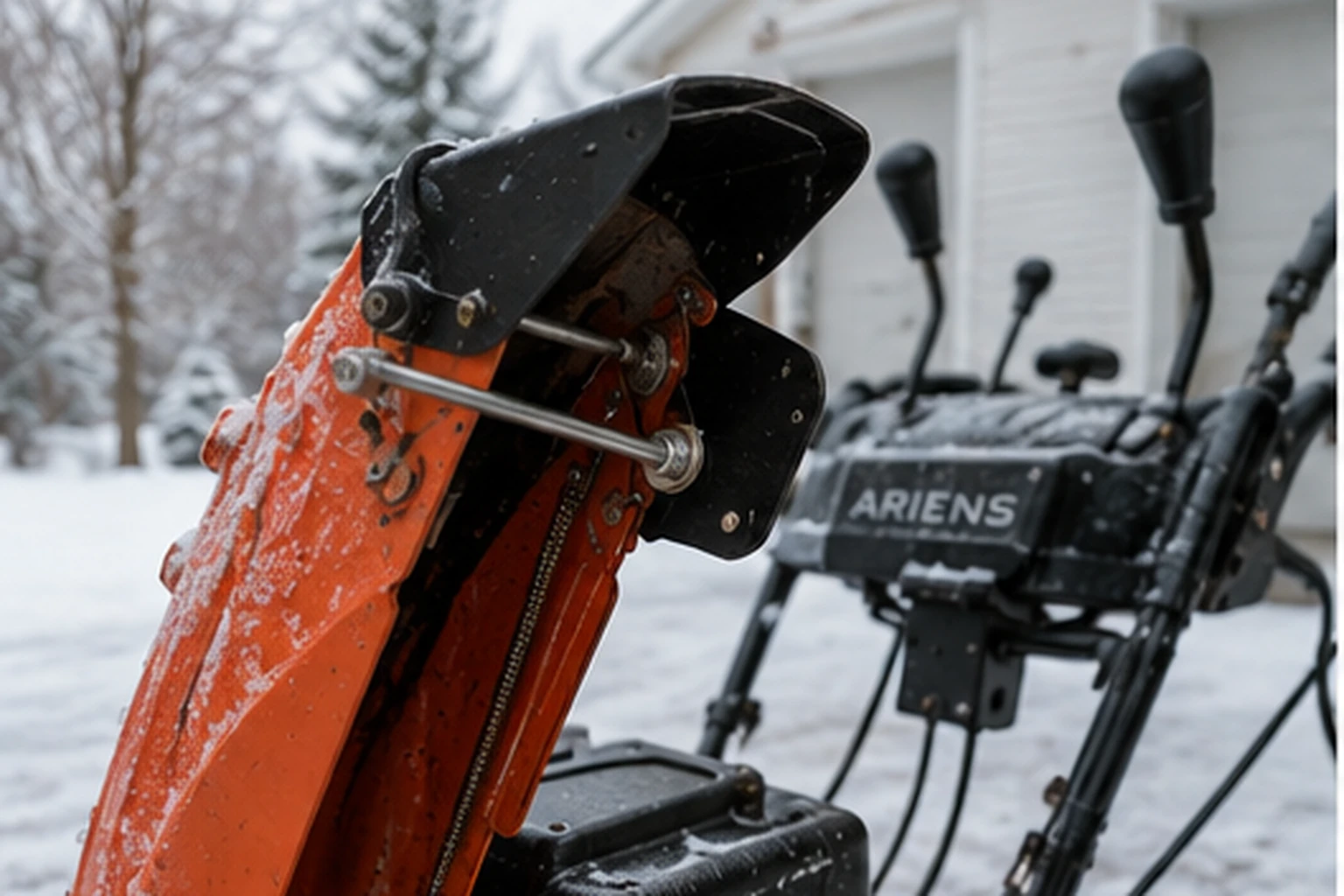
Applies to Deluxe 24 (921069)
Identifiers: 921069 · Deluxe 24
Engine ID: Ariens AX 252cc current specification — verify engine label for parts
Guide scope: Applies to Ariens Deluxe 24 model 921069, serial 000101+, under operator manual 30219300A. The chute-rotation and deflector-hold adjustments on this page are not transferred to legacy Deluxe 24 generations without their matched manuals.
Operator manual 30219300A identifies model 921069 serial 000101+. Current Ariens product data lists AX 252cc; keep the serial number and engine label with the machine before engine-specific parts.
The 921069 manual separates the two faults: tighten the nut under the control panel for a deflector that will not stay, and tighten the carriage-bolt nut if the whole discharge chute will not stay in position.
Stop the engine and remove the key before adjusting chute hardware near the discharge path.
Diagnostic sequence
Work in order. The early checks are intentionally low-disassembly and model-specific; stop once the symptom changes or the fault is confirmed.
Deflector versus chute rotation
Why this check: They use different controls and adjustments.
What to do: Identify whether the top deflector is dropping or the whole chute is rotating.
Deflector holding force
Why this check: The manual gives a direct correction for a deflector that will not stay.
What to do: Tighten the nut under the control panel in small increments and verify full travel.
Cable/full range
Why this check: A deflector that stays put but cannot reach its full range is a cable-travel issue.
What to do: Follow the manual cable adjustment sequence rather than over-tightening the holding nut.
Whole-chute holding force
Why this check: A chute that rotates left or right out of position uses a different holding adjustment from the upper deflector.
What to do: If the whole discharge chute will not stay selected, the 921069 manual says to tighten the nut on the carriage bolt in small increments.
Ice before adjustment
Why this check: Frozen controls can mimic an adjustment problem.
What to do: Thaw ice and re-test before changing hardware settings.
How to read this symptom on this model
First name the part that is actually moving. The discharge chute rotates left and right, while the deflector changes the vertical throw angle. “Chute won’t stay” is often used for both symptoms, but the 921069 uses different controls and adjustments. If the deflector slowly falls from the selected angle, the operator-manual adjustment is different from a chute that drifts left or right.
The current 30219300A manual gives two separate holding-force corrections. If the deflector does not stay in its selected position, Ariens says to tighten the nut under the control panel. If the entire discharge chute does not stay in its selected position, the manual instead says to tighten the nut on the carriage bolt. Treating those as the same adjustment can leave one symptom unchanged while making the other control unnecessarily stiff.
Full travel is a second test, not the same thing as holding force. For a deflector that will hold position but will not reach its complete range, the manual uses the upper and lower chute-cable adjustment nuts: one direction changes the lower end of travel and the opposite direction changes the higher end. That means a drooping deflector and a restricted-travel deflector should not automatically receive the same correction.
A frozen control can also imitate a loose adjustment. If the symptom appears only after wet snow freezes around the chute, adding more cable tension or tightening hardware may hide the real cause and overload the control once the ice thaws. A warm-and-dry comparison is therefore useful evidence: if the mechanism returns to normal after thawing, correct the freeze-up condition before changing the baseline adjustment.
Also pay attention to when the drift occurs. A chute that immediately falls out of position with the engine off suggests insufficient holding force or worn hardware. A setting that holds while parked but moves only under engine vibration still deserves the same manual adjustment check, but it is worth inspecting the carriage-bolt hardware and mounting points for visible looseness before assuming the cable itself is bad.
First decide which part actually moves after you let go. A discharge deflector that droops downward is not the same problem as the entire chute rotating away from the selected direction. The 921069 uses different adjustment points for those motions, so tightening the wrong control can create stiffness without fixing the drift. Mark the starting position, move only the affected control, release it and watch which component changes. That observation determines whether holding force, cable travel or another chute-control branch should be used.
After increasing holding force or correcting cable travel, check the full usable range rather than only the position that used to slip. The deflector should stay where set and still move through its intended travel without binding. A correction that holds one angle only because the control is overtightened is incomplete. If the adjustment cannot provide both stable position and normal range, stop before forcing the hardware and use the matched Ariens service path.
A small controlled adjustment is more informative than one large turn of the hardware. Mark the original nut position, tighten only enough to test holding force, then move the chute or deflector through the full operating range before making another change. If holding improves but travel becomes noticeably heavier or incomplete, back toward the original setting and use the cable or alternate chute branch instead. The goal is not maximum friction; it is enough resistance to hold the selected position while preserving normal control travel on model 921069.
Before you order parts
Do not order a chute cable or control assembly until the machine is thawed and the full range of motion is checked. Mark the original nut or cable position before adjustment and make small changes. If the control reaches full travel but the deflector still cannot hold position, then wear or damage is more plausible than simple adjustment.
Before buying hardware, identify which fastener the matched 921069 manual actually uses for the symptom. The deflector holding-force nut is under the control panel; whole-chute holding force is adjusted at the carriage-bolt nut. Inspect those fasteners, the cable anchors and the visible cable housing for looseness, deformation or a sheath that moves when the control is operated. Replacing a cable without first proving that the cable is failing can leave a loose carriage-bolt adjustment untouched.
Do not “solve” a weak hold by tightening until the control becomes hard to move. The correct endpoint is enough resistance to hold the selected position while preserving the complete intended travel. If a small adjustment does not improve holding force, or if the hardware is damaged, stop escalating torque and move to the exact service/parts information for model 921069.
Back to the exact model hub →Retest without creating a second problem
Move the deflector through several positions with the engine off, then confirm it holds without excessive lever force. Check the whole chute separately through left and right travel so you know which mechanism changed. If added tension reduces travel, return toward the marked baseline and correct the travel adjustment instead of continuing to tighten.
During the first powered test, keep the discharge aimed into a clear area and verify both the chute direction and deflector angle remain stable at normal engine vibration. Then shut down and recheck that neither control became noticeably stiffer. A successful repair must hold position and remain controllable; “it no longer moves because it is almost locked” is not a pass.
After a wet-snow session, clear accumulated snow with the machine shut down and store it so the chute mechanism can dry. If the same complaint appears only after refreezing, record that pattern rather than repeatedly changing the mechanical adjustment. That makes the next diagnosis about moisture/freeze-up instead of creating a new over-adjustment problem.
Make sure this is the right symptom
The same search phrase can lead to a different branch on another machine. Compare the nearest model-specific examples: Toro Power Clear 721 QZE (38756): Quick Shoot chute won't turn / stiff or unequal travel · Troy-Bilt Storm 2410 family: chute hard to rotate.
Model-specific notes
- Do not force a frozen chute; plastic and cable components can be damaged.
- Mark the starting position of adjustment hardware so you can return to baseline.
Questions people get wrong on this model
Should I tighten the nut as much as possible?
No. Tighten only enough to hold position while preserving full travel. Mark the original nut or cable position before adjustment and make small changes. If added tension reduces travel, return toward the marked baseline and correct the travel adjustment instead of continuing to tighten. A successful repair must hold position and remain controllable; “it no longer moves because it is almost locked” is not a pass.
What if the whole chute turns by itself?
That is a different adjustment path from a drooping deflector; use the discharge-chute adjustment section for your exact model. Identify whether the top deflector is dropping or the whole chute is rotating. If the control reaches full travel but the deflector still cannot hold position, then wear or damage is more plausible than simple adjustment.
Can ice make a correctly adjusted chute look like it needs more tension?
Yes. Freeze-up can create drag or prevent full movement, which can tempt you to overtighten the holding adjustment. Thaw and clear the mechanism first, then adjust only enough to hold position while preserving full travel. If the control reaches full travel but the deflector still cannot hold position, then wear or damage is more plausible than simple adjustment.
Primary-source trail
Manufacturer material used for this diagnosis. Verify the model/serial range before ordering parts or applying an adjustment.
Ariens Deluxe Series Operator Manual 30219300AModels 921069–921072; troubleshooting and adjustment tables.apache.ariens.com →Ariens Deluxe 24 current product page — model 921069Official current Deluxe 24 page identifies model 921069 and the current Ariens AX 252cc specification.www.ariens.com →Ariens manuals lookupOfficial model-and-serial manual resolver. Use it as the stable path if a deep PDF URL changes.www.ariens.com →