Ariens Deluxe 24 921069 Won't Start: Check These in Manual Order
A model-specific no-start path for the 921069 Deluxe 24, starting with controls and fuel before moving to service.
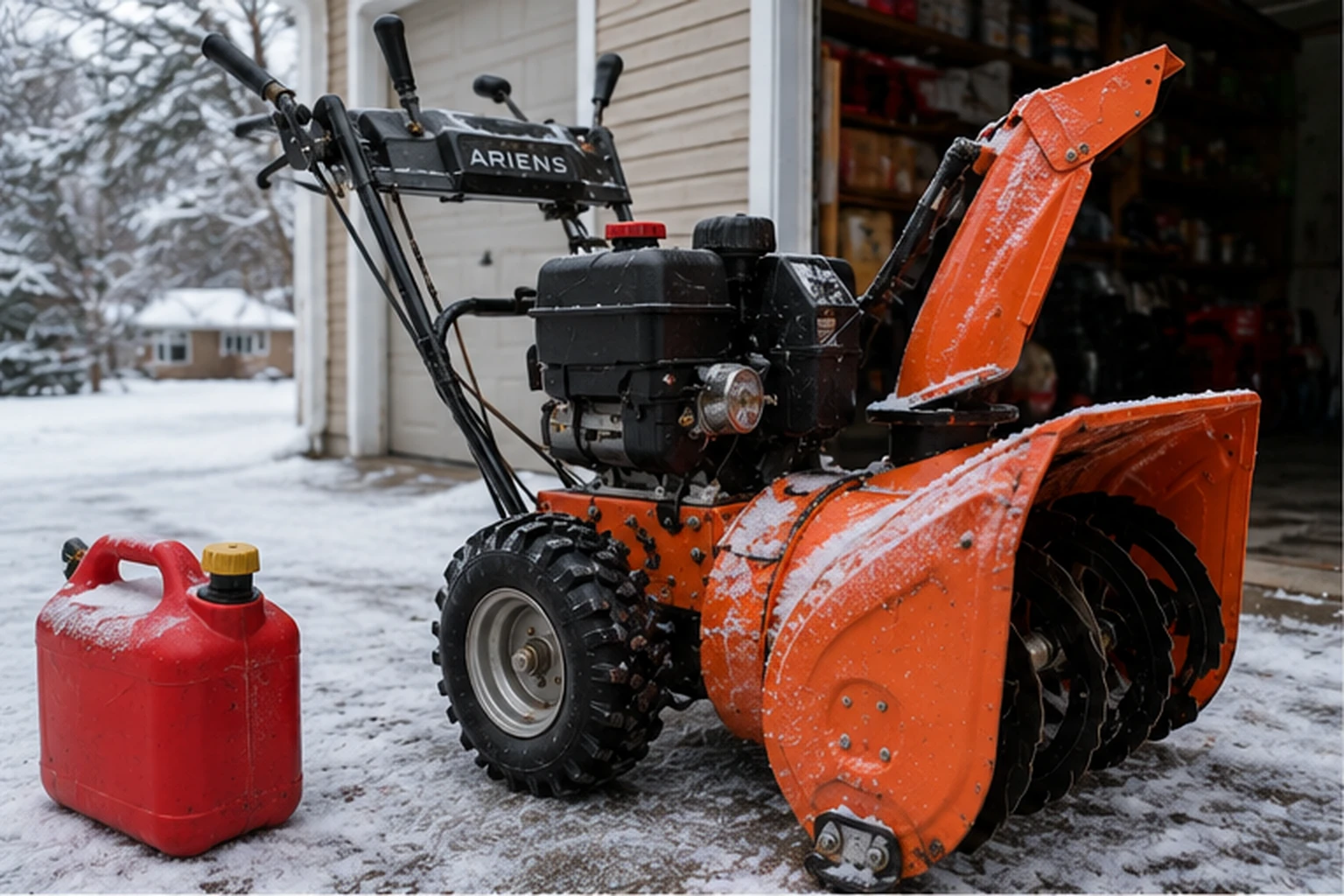
Applies to Deluxe 24 (921069)
Identifiers: 921069 · Deluxe 24
Engine ID: Ariens AX 252cc current specification — verify engine label for parts
Guide scope: Applies to Ariens Deluxe 24 model 921069, serial 000101+, under operator manual 30219300A. The unit manual covers external start conditions; deeper engine service must follow the matched engine documentation.
Operator manual 30219300A identifies model 921069 serial 000101+. Current Ariens product data lists AX 252cc; keep the serial number and engine label with the machine before engine-specific parts.
On the 921069 manual, the first no-start checks are the engine key, choke position, fuel valve and fuel supply. Do not jump straight to carburetor work.
Move to a ventilated area, disengage auger and traction, and keep ignition sources away from fuel.
Diagnostic sequence
Work in order. The early checks are intentionally low-disassembly and model-specific; stop once the symptom changes or the fault is confirmed.
Engine key
Why this check: The Ariens troubleshooting table lists a missing key first.
What to do: Confirm the key is fully inserted before repeating the normal start sequence.
What the result means: If it now starts, no mechanical repair is indicated.
Choke and throttle start position
Why this check: A cold engine needs the manual-specified choke setting.
What to do: Set choke to ON for a cold start and follow the manual sequence rather than adding extra primer cycles.
Fuel valve
Why this check: A closed valve prevents fuel from reaching the engine.
What to do: Move the valve to OPEN and verify the control is not iced in place.
Fuel quantity and age
Why this check: Empty or stale fuel can mimic ignition trouble.
What to do: If the tank is empty, add fresh approved fuel. If fuel has been stored for a long period, stop and follow the engine/fuel service guidance rather than mixing old and new fuel blindly.
Escalation point
Why this check: Once the external controls and fresh fuel are correct, further diagnosis can involve ignition or carburetion.
What to do: Use the engine service information or an Ariens service provider; do not defeat safety interlocks.
How to read this symptom on this model
A no-start on the current 921069 should be separated into a control/fuel condition and a deeper engine condition. Ariens puts the removable key, choke, fuel valve and fuel supply in the operator-level troubleshooting path, which is why this guide checks them before anything that requires engine service. That order matters after summer storage: one missed control position or an empty/stale-fuel condition can look exactly like a failed ignition or carburetor to someone who starts replacing parts too early.
Pay attention to whether the engine never fires at all, briefly fires and quits, or runs only after the starting controls are changed. Those are different observations. This page deliberately stops before telling you to alter carburetor settings or ignition components because the Ariens unit manual points engine-service work back to the engine documentation. Once the external start conditions are correct, that is the correct boundary for deeper diagnosis.
For 921069 serial 000101+, operator manual 30219300A gives a concrete no-start order: engine key, choke, fuel valve, fuel level, contaminated fuel, cold-engine priming, electric-start circuit, spark-plug connection/condition, flooding and then deeper engine service. Keeping that sequence prevents a simple control or fuel state from being mislabeled as a carburetor failure.
Cold-start and warm-start behavior must be separated. Ariens specifies three primer presses for a cold engine and explicitly says not to prime a warm engine. Repeated priming after several failed attempts can create the manual's flooded-cylinder branch, so the history of what was tried is part of the diagnosis.
The troubleshooting table distinguishes 'engine will not start' from 'engine starts hard or runs poorly' and from 'unit runs briefly then stops.' If the engine fires but will not stay running, stop using the no-start page as a catch-all. Move to the symptom that matches what the engine actually does, because venting, rich mixture and run-quality branches are different from a true no-fire condition.
Electric and recoil starting are also useful cross-checks. A starter-circuit problem is listed as an electric-start branch, while spark/fuel/control conditions can prevent the engine from firing regardless of how it is cranked. If recoil cranks the engine normally but the electric system does not, preserve that distinction instead of treating the whole machine as a generic no-start.
A useful no-start observation is whether the engine ever fires, even briefly. If the starter or recoil turns the engine at normal speed and there is no sign of combustion, keep the diagnosis on the key/choke/fuel-supply path before treating the electric starter as the fault. If the engine does not crank at all, that is a different branch. Make this distinction before changing fuel-system parts, because a normal cranking system and a no-combustion symptom narrow the problem much more than the phrase “won’t start.”
Primer history can change the symptom while you are diagnosing it. Manual 30219300A calls for three primer presses on a cold engine and says not to prime a warm engine; it also gives flooding its own no-start correction. If the engine has been repeatedly primed during several failed attempts, stop adding fuel before judging the spark or carburetor. A later start after the excess-fuel condition clears is evidence that the troubleshooting process itself had become part of the no-start, not proof that a carburetor replacement was required.
Use the Ariens no-start table as an ordered decision tree, not as a list of parts. On 921069 serial 000101 and up, manual 30219300A checks the key, choke and fuel valve before it moves through fuel condition, cold priming, the starting circuit, spark-plug condition and flooding. That order matters because each observation changes the meaning of the next one. If the engine cranks at normal speed and the controls are correct, fresh fuel plus the specified cold-prime routine is a cleaner test than immediately removing the carburetor. If repeated attempts have already added excess fuel, treat flooding as its own branch and stop priming until that condition has cleared.
Also preserve whether the symptom changes between the first cold attempt and a later warm restart. Ariens specifies three primer presses for a cold engine and explicitly says not to prime a warm engine. A machine that starts cold but becomes difficult only after several warm, heavily primed attempts is giving very different evidence from one that never fires from cold. Conversely, normal cranking with no combustion after the correct controls, known fuel and appropriate prime/choke sequence makes ignition or deeper fuel-system service more credible. If the engine does not crank normally, leave this combustion-focused branch and diagnose the recoil or electric-start system instead.
Before you order parts
Do not order a carburetor, coil, starter or fuel-system part merely because the machine sat through the off-season. First record the model/serial decal, confirm the start controls, and test with fresh approved fuel using the normal start sequence. If the symptom changes after one of those checks, that change is useful diagnostic evidence and should be preserved instead of masked by replacing several parts at once.
Do not order a carburetor, ignition coil or electric starter until the 921069 serial gate is confirmed and the operator-level list has been worked in order. Record whether the engine cranks, whether it ever fires, the cold/warm state, primer count, fuel age and whether recoil and electric start behave differently. Those observations are more valuable than a speculative parts list.
Back to the exact model hub →Retest without creating a second problem
After correcting an external condition, start the machine outdoors with both drive controls disengaged. Let it stabilize rather than immediately loading the auger. If it still does not start, stop repeated cranking and move to the engine-specific service information or an Ariens service provider with the exact model and serial number.
After correcting one verified condition, make the next start attempt outdoors with both clutches released. Do not keep adding primer cycles between attempts. If the engine still never fires after the documented external checks, stop there and move to the engine-specific manual or an Ariens/engine service center rather than improvising carburetor or ignition adjustments.
Make sure this is the right symptom
If your machine is showing an adjacent symptom instead, switch paths before changing parts: runs briefly then stops · electric start button not working.
The same search phrase can lead to a different branch on another machine. Compare the nearest model-specific examples: Toro Power Clear 721 E (38753): won't start · Toro Power Clear 721 E (38753): starts then dies or needs choke.
Model-specific notes
- This guide is for 921069 serial 000101+ as listed in manual 30219300A.
- A no-start after summer storage is not automatically a carburetor failure. Confirm the simple manual-listed conditions first.
Questions people get wrong on this model
Should I keep using the electric starter until it catches?
No. Follow the starter duty-cycle instructions in the engine/operator documentation; repeated long cranking can overheat the starter. Do not order a carburetor, ignition coil or electric starter until the 921069 serial gate is confirmed and the operator-level list has been worked in order. Record whether the engine cranks, whether it ever fires, the cold/warm state, primer count, fuel age and whether recoil and electric start behave differently.
Can I use starting fluid?
This guide does not recommend it. It is not part of the normal Ariens start sequence and can create a fire or engine-damage risk. First record the model/serial decal, confirm the start controls, and test with fresh approved fuel using the normal start sequence.
What should I learn from a normal recoil crank but no engine fire?
It tells you the engine is being turned, but it does not identify the failed system by itself. Keep following the 921069 manual order—controls, fuel condition, cold/warm starting sequence and spark/engine-service boundary—instead of treating cranking as proof of a carburetor fault.
Primary-source trail
Manufacturer material used for this diagnosis. Verify the model/serial range before ordering parts or applying an adjustment.
Ariens Deluxe Series Operator Manual 30219300AModels 921069–921072; troubleshooting and adjustment tables.apache.ariens.com →Ariens Deluxe 24 current product page — model 921069Official current Deluxe 24 page identifies model 921069 and the current Ariens AX 252cc specification.www.ariens.com →Ariens manuals lookupOfficial model-and-serial manual resolver. Use it as the stable path if a deep PDF URL changes.www.ariens.com →