Toro Power Clear 721 E Not Throwing Snow: Chute, Rotor and Pace Checks
A model-38753 discharge path that separates a physical clog/freeze-up from rotor engagement, rotor-blade wear and excessive snow load.
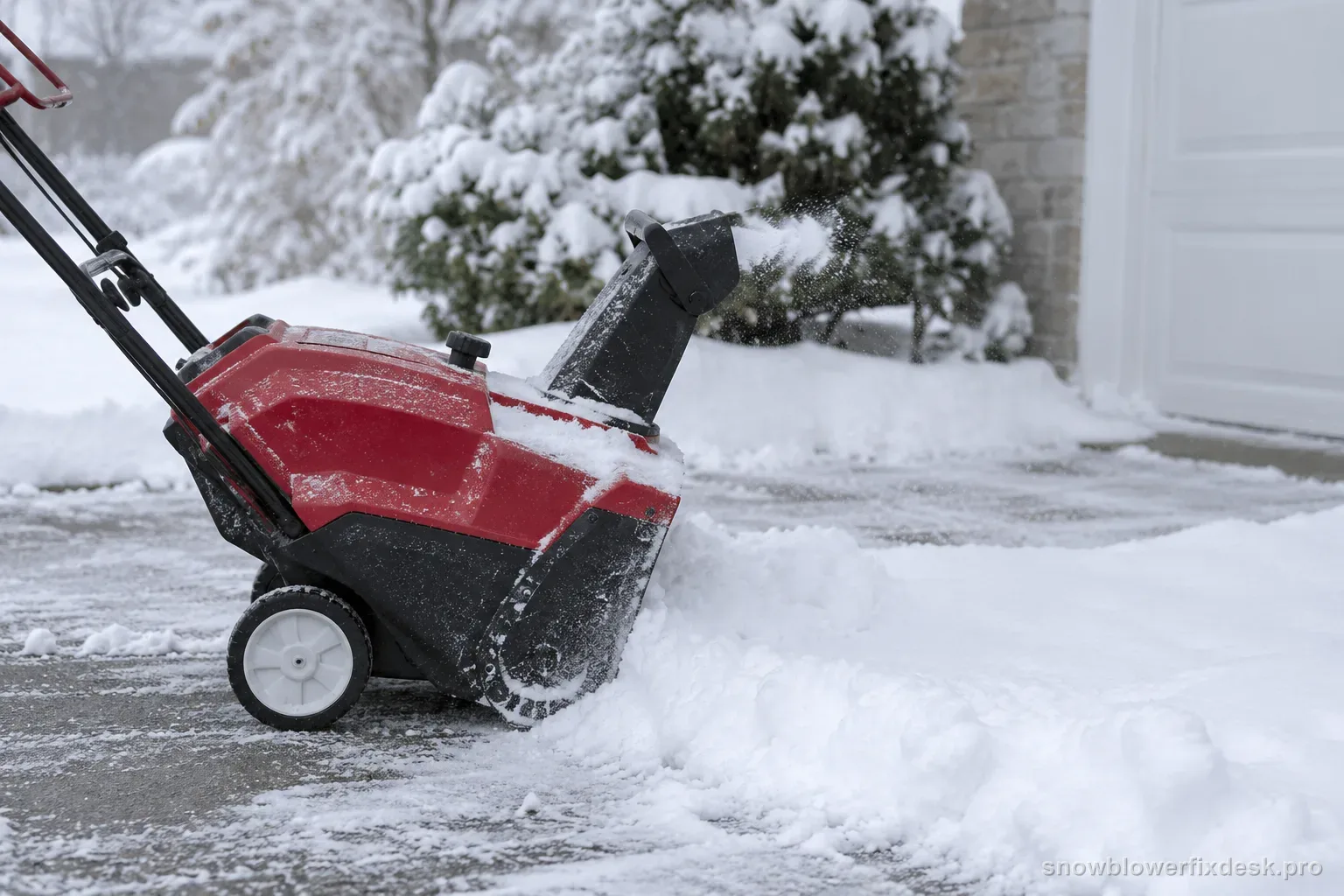
Applies to Power Clear 721 E (38753)
Identifiers: 38753 · 721 E
Engine ID: Toro 212cc
Guide scope: Power Clear 721 E model 38753 spans multiple Toro serial ranges. Resolve the serial before using an adjustment: this site records early operator manual 3429-269 for 400000000–406836563 and later 3439-829 ranges from 406836564 onward in the verified Toro records.
Model 38753 spans multiple serial ranges. Use the serial resolver below before assuming a manual or parts catalog.
This model has serial-range boundaries — resolve the serial before using a manual →
721 E 38753 is not the QZE 38756
This diagnosis is scoped to model 38753. The sibling 38756 is the 721 QZE and adds the Quick Shoot chute-control context, so confirm the model/serial label before using a parallel-looking QZE procedure.
If the engine runs, rule out a clogged or frozen discharge path first. Then use the matched serial-range manual to verify rotor-control engagement and blade wear before assuming a belt or engine failure.
Shut the engine off, wait at least 10 seconds for the rotor blades to stop and use the clean-out tool—never your hands.
Diagnostic sequence
Work in order. The early checks are intentionally low-disassembly and model-specific; stop once the symptom changes or the fault is confirmed.
Resolve the model and serial first
Why this check: Toro changes parts/manual records across 38753 production ranges.
What to do: Read model 38753 and the serial tag, then open the operator manual returned by the serial resolver before applying a cable dimension or part number.
Clear the chute and rotor area safely
Why this check: A packed discharge path can make a healthy engine/rotor system appear to have lost throwing power.
What to do: Shut down, wait for the rotor to stop and use the clean-out tool. If the symptom followed wet snow and storage, thaw freeze-up instead of forcing the rotor or chute.
Verify rotor-control engagement
Why this check: Too little cable engagement can reduce belt/rotor drive, while too much tension can keep the rotor from stopping.
What to do: Use the matched manual’s control-bar/cable check. Where the matched procedure specifies the 2–3 mm gap, verify that value and also confirm that some cable slack remains when released.
Confirm safe rotor stop
Why this check: A discharge adjustment is not acceptable if the rotor continues to turn with the control released.
What to do: From the operator position, release the control and verify normal stopping before making any snow test. If it does not stop correctly, treat that as a stop-use control fault.
Inspect rotor blade wear
Why this check: Toro uses a wear-indicator hole to identify when rotor blades and scraper have reached the replacement point.
What to do: Inspect the wear indicators with the machine disabled. If exposed as described in the matched manual, use the rotor-blade/scraper service path rather than adding cable tension.
Standardize snow load and pace
Why this check: Wet/deep snow or overfeeding can reduce discharge even when the mechanism is healthy.
What to do: Retest with a narrower pass and let the machine work at its own pace. Compare performance in the same snow before calling a mechanical repair unsuccessful.
How to read this symptom on this model
A 721 E that runs but does not throw snow should be divided into three zones: the physical discharge path, rotor engagement/wear and operating load. A packed chute or frozen rotor area can create sudden no-throw with no engine fault. A control cable that does not engage the belt fully can make the rotor spin weakly. Worn rotor blades can reduce clearing/throw performance gradually. Keeping those patterns separate is more useful than jumping directly to a belt.
Serial matching matters on model 38753 because Toro separates manuals and parts records across production ranges. This site records early manual 3429-269 for 400000000–406836563 and later 3439-829 ranges beginning at 406836564 in the verified records. The physical safety sequence is stable—stop, wait and use the clean-out tool—but an adjustment dimension should come from the operator manual returned for the actual serial.
Where the matched Toro procedure uses the 2–3 mm control-bar gap, that number is only one half of the test. The cable must also retain slack when the control is released so the rotor can stop. More tension is therefore not automatically better throwing performance. If an adjustment improves throw but the rotor does not stop normally, the repair failed the safety gate.
Rotor-blade wear is a gradual evidence branch. Toro provides a wear-indicator hole for inspection. A machine whose blades have reached the wear indicator may throw and clear poorly even though the engine sounds healthy. This is different from a machine that threw normally until it struck dense snow and then suddenly stopped discharging.
Snow load is a controlled variable, not an excuse. Wet or deep snow can overwhelm a single-stage machine, and Toro tells the operator not to overload it. If a narrower pass restores good discharge in the same snow, load/pace matters. If the machine remains weak with a clear chute, correct control behavior and modest load, the mechanical drive branch becomes much stronger.
Single-stage diagnosis starts with the rotor, not with two-stage shear-bolt assumptions. With the 38753 safely stopped, clear the chute and inspect whether packed snow or ice is preventing the rotor from moving freely. Then look at rotor-blade wear and control-cable/belt behavior. A clear chute with worn paddles can still throw poorly, while a healthy rotor can appear weak when the operator is forcing too much wet snow into the housing. Those observations should be separated before any belt decision.
Retest with a narrower swath and let the machine set the pace. If throw improves immediately under lighter feed, snow load is still a major part of the symptom. If the rotor remains slow or the belt squeals under a modest load after the machine is dry, move toward the cable/belt path. The useful comparison is not maximum distance in one storm; it is whether the same machine recovers when load, clogging and rotor wear are controlled.
The control-cable gap is not a “more tension is better” setting. On the later 721 manual, the released control needs some slack so the rotor can stop properly, while engagement still has to transmit useful belt load. If throw improves only after the cable is tightened beyond the specified relationship, the adjustment has not proved a repair; it has traded poor discharge for a stop-safety problem. Recheck the 2–3 mm control-bar gap where that manual range applies and confirm rotor stopping before using snow load as the final performance test.
Before you order parts
Before buying a belt or rotor set, resolve the serial and clear all snow/ice from the chute and rotor area. A frozen or packed machine can make new parts look necessary when the actual repair is simply removing the restriction and preventing refreeze after use.
Before adding cable tension, verify the matched control procedure and the released-rotor stop behavior. Never use cable adjustment to compensate for worn blades or a clogged chute.
Before replacing rotor blades, inspect the manufacturer wear indicator rather than judging by appearance alone. If the indicator is exposed, follow the matched Toro blade/scraper service path so rotor geometry stays consistent.
Back to the exact model hub →Retest without creating a second problem
After clearing or adjustment, stand at the operator position and test brief rotor engagement with no snow load. Release the control and verify the rotor stops normally. Do not proceed to snow if disengagement is wrong.
Make a narrow pass in consistent snow and let the machine advance at a pace it can process. Compare discharge before widening the swath. A clean-path machine that improves markedly with reduced feed provides load evidence.
If the rotor stops safely but throw remains weak in modest snow and the wear indicators are not at the replacement point, preserve the serial, cable setting and symptom pattern and move to the matched belt/service branch instead of random parts replacement.
Make sure this is the right symptom
The same search phrase can lead to a different branch on another machine. Compare the nearest model-specific examples: Ariens Deluxe 24 (921069): not throwing snow · EGO SNT2110 / SNT2110-FC: weak throw or chute clogs.
Model-specific notes
- A 721 E can have a strong-running engine and still throw poorly because the discharge symptom can live entirely in the rotor/chute/control path.
- Do not use advertised throw distance as a diagnostic specification; snow moisture, depth, wind and feed rate change real-world distance substantially.
Questions people get wrong on this model
Can I reach into the chute after the engine is off?
No. Toro instructs the operator to wait for the rotor to stop and use the clean-out tool rather than hands. A 721 E can have a strong-running engine and still throw poorly because the discharge symptom can live entirely in the rotor/chute/control path.
Does an exposed rotor wear hole mean I should only replace one damaged blade?
Follow the matched Toro service guidance for the rotor blades and scraper as a wear set; do not improvise a one-off wear correction that changes rotor geometry. Toro uses a wear-indicator hole to identify when rotor blades and scraper have reached the replacement point. If exposed as described in the matched manual, use the rotor-blade/scraper service path rather than adding cable tension.
If the chute is clear but discharge is still weak, what evidence matters next?
Check whether the rotor is actually reaching useful speed under load, whether control-cable adjustment is correct and whether the rotor blades/scraper have reached their wear condition. A clear chute removes one branch; it does not prove the rest of the rotor-drive system is healthy.
Primary-source trail
Manufacturer material used for this diagnosis. Verify the model/serial range before ordering parts or applying an adjustment.
Toro Power Clear 721 Operator Manual 3439-829 Rev BOfficial current operator manual covers model 38753 serial 406836564 and up; includes the 2–3 mm control-cable gap, disengaged-cable slack requirement, rotor-blade wear indicator and blades-plus-scraper replacement boundary.www.toro.com →Toro Power Clear 721 Interactive Operator ManualOfficial interactive manual for the same later 38753 generation, with control-cable, rotor-stop, wear, fuel, starting and freeze-up guidance.manuals.toro.com →Toro 38753 Parts & Manuals — current serial rangeOfficial current-range model page confirms 38753 serial 416153644+ still uses operator manual 3439-829 / 3439-830.www.toro.com →Toro 38753 product page — serial-range resolverOfficial product page exposes the model 38753 serial-range selector so later manual coverage can be resolved before applying an adjustment or replacement decision.www.toro.com →