Cub Cadet 2X 24 IntelliPOWER 31AM5HVRB10 Won't Start: Exact-Model Checks
A model-locked no-start path for the 31AM5HVRB10 that starts with identity, normal start controls and seasonal engine checks before parts.
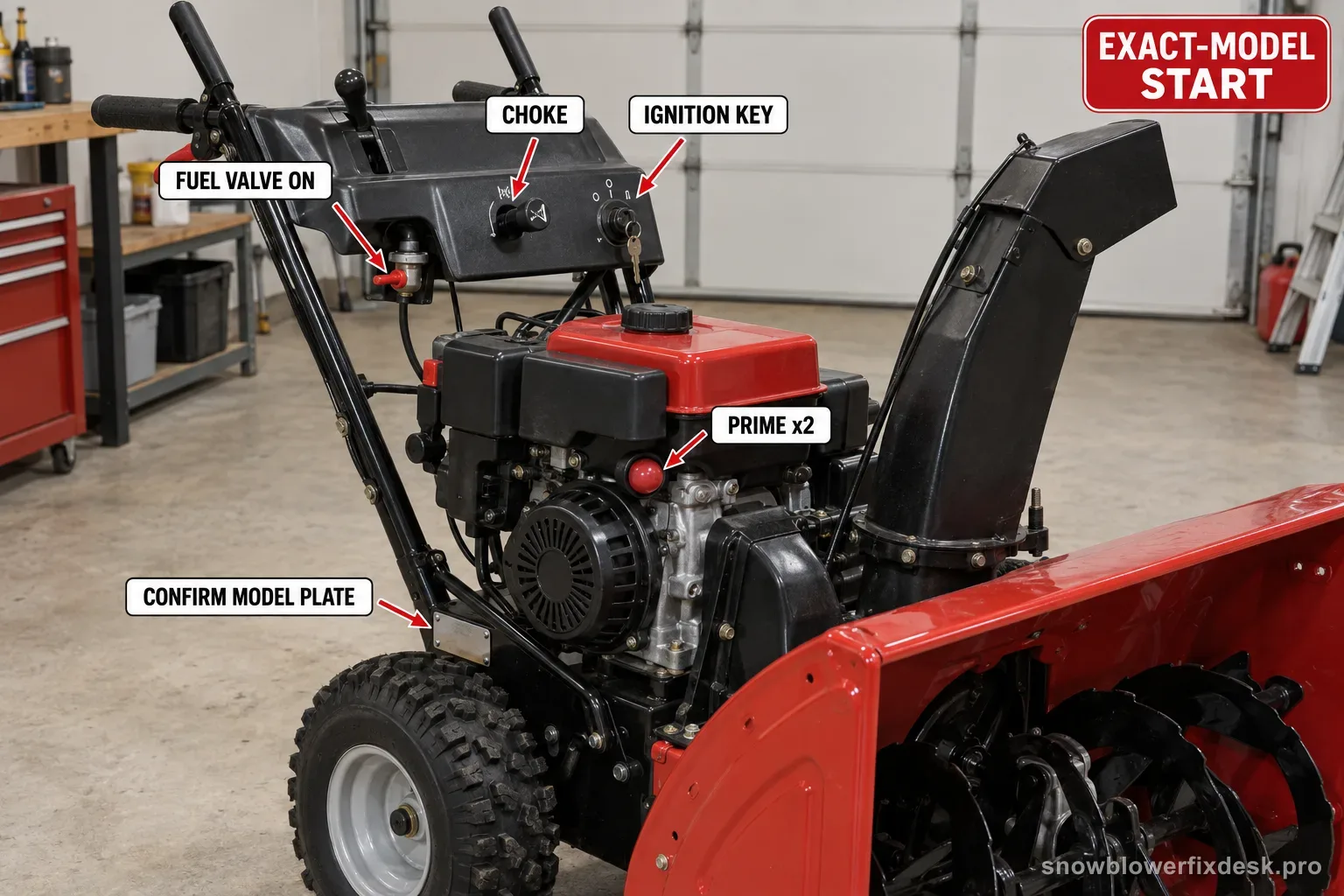
Applies to 2X 24 IntelliPOWER (31AM5HVRB10)
Identifiers: 31AM5HVRB10 · 2X 24 IntelliPOWER
Engine ID: 875-W0
Guide scope: Use only for Cub Cadet 2X 24 IntelliPOWER model 31AM5HVRB10 with the product-page manual set that includes engine form 769-26924 and operator manual 769-26795. Match the 11-character product ID before engine-specific parts.
Cub Cadet identifies this exact machine as 31AM5HVRB10. The product ID is 11 characters and is printed on the Product Identification Label.
Confirm model 31AM5HVRB10 and engine 875-W0 first. Use the normal key/start sequence, verify fuel and seasonal engine condition, then move to the matched engine manual rather than ordering a generic Cub Cadet carburetor.
Start outdoors on a clear, level surface with auger and drive controls released. Let the engine cool before fuel or spark-plug inspection.
Diagnostic sequence
Work in order. The early checks are intentionally low-disassembly and model-specific; stop once the symptom changes or the fault is confirmed.
Confirm the 11-character product ID
Why this check: Cub Cadet says the model number is essential to finding the correct parts and manuals.
What to do: Read the Product Identification Label and confirm 31AM5HVRB10 before using this guide.
Use the normal starting sequence
Why this check: Cub Cadet documents key, prime/choke where applicable and electric-start sequence rather than repeated uncontrolled cranking.
What to do: Follow the controls and starting method in the matched 769-26924/769-26795 documentation; do not assume a different Cub Cadet engine has the same control layout.
Fuel and seasonal history
Why this check: A machine coming out of storage has different evidence from one that stopped yesterday.
What to do: Confirm usable fuel and note whether the problem appeared after off-season storage. Do not top off obviously stale fuel and call the mixture fresh.
Oil and spark-plug condition
Why this check: Cub Cadet specifically includes oil and spark-plug checks in pre-winter preparation.
What to do: Check oil and inspect/service the spark plug according to the exact engine/operator manual.
Escalate with engine ID 875-W0
Why this check: The chassis model and engine identity both matter once external start conditions are correct.
What to do: Use the listed engine manual or authorized service for ignition/fuel-system diagnosis instead of applying a generic small-engine adjustment.
How to read this symptom on this model
Keep this no-start page locked to model 31AM5HVRB10. Cub Cadet’s current product page identifies that exact chassis, a 243cc 875-W0 engine, recoil plus push-button electric start and IntelliPOWER electronic governing. Those identifiers matter because “Cub Cadet 2X 24” spans other engines and years. Record the chassis ID and engine ID before borrowing a plug, carburetor or starter assumption from another 2X machine.
Separate “does not crank” from “cranks but never fires.” If recoil turns the engine normally but the electric starter does not, stay in the electric-start power/connection branch. If both methods crank the engine but it never fires, the useful evidence shifts toward start-control setup, fuel history and ignition. Combining those patterns into a single carburetor diagnosis throws away the fastest discriminator on a dual-start machine.
For a normal cold start, follow the matched engine/manual sequence rather than improvising extra prime or choke cycles. Cub Cadet’s snow-blower FAQ describes the electric-start flow as key in, prime/choke where applicable, connect the extension cord, then use the electric-start button. If a failed attempt is followed by repeated enrichment, the engine can become harder to start and the original symptom becomes less clear.
Seasonal history matters. Cub Cadet’s winter-preparation guidance specifically calls for checking the spark plug and engine oil before the season. A machine that started normally last winter and now will not fire after months of storage should have fuel age, oil level and plug condition documented before parts are ordered. Storage history is evidence; it is not proof that the carburetor has failed.
Keep IntelliPOWER out of the first no-start conclusion. The electronic governor is part of this model’s identity, but a no-start still needs the basic engine-start conditions to be correct. Do not adjust governor hardware or electrical components simply because the product name includes IntelliPOWER. Once the external starting conditions are correct, deeper governor/ignition diagnosis belongs to the 875-W0 engine service path.
Spark-plug service must stay engine-specific. The product page gives the engine model, and the matched engine manual is the right place for plug specification and service procedure. A plug part or gap copied from a nearby Cub Cadet engine can be wrong even if the snow-blower chassis looks nearly identical.
Use the result of each start method as a diagnostic branch. Electric cranks/recoil cranks/no fire means the starter itself is doing its job; recoil starts/electric does not points toward the electric path; neither method turns the engine points to a different mechanical/start-system problem. Write those observations down before replacing anything so the next step is based on behavior rather than the generic phrase “won’t start.”
Treat the electric-start cord as part of the test setup, not as proof of an engine fault. Cub Cadet’s start guidance puts the extension-cord connection immediately before the electric-start button. If the electric system does nothing, verify the cord and power path before assuming the engine itself is unable to start; then unplug the cord before moving to unrelated inspection. A successful recoil start after an electric-start failure is particularly useful because it demonstrates that the engine can run while leaving the electric branch unresolved.
Use recoil and electric start as separate observations. If one method turns the engine normally but the engine never fires, stay with the fuel, choke/primer and ignition branches rather than replacing the starter. If recoil turns the engine but the electric circuit is inactive, keep that comparison for the starter path. Confirm the full 11-character product ID before using engine-specific parts or settings, because the chassis model does not by itself prove the exact engine revision installed on every production unit.
Use the exact 31AM5HVRB10 product page to keep the chassis and 875-W0 engine documentation paired. A push-button electric-start complaint and an engine-that-cranks-but-will-not-fire complaint should not share the same parts list. If recoil turns the engine normally while electric start is inactive, combustion has not yet been disproved; focus on the starter supply/control branch. If either method cranks the engine normally but it never catches, move through key/control, fuel, choke and spark evidence in the matched engine manual. Recording the crank/no-crank distinction before any carburetor work is one of the simplest ways to prevent a broad “won’t start” symptom from becoming an expensive guess.
Before you order parts
Before buying a starter, carburetor, coil or spark plug, record 31AM5HVRB10 and engine 875-W0, note fuel age and storage history, and compare recoil with electric-start behavior. Those facts determine whether the repair belongs to the starter circuit, external start conditions or deeper engine service.
Do not use a generic “Cub Cadet 243cc” part listing as the only fit evidence. Confirm the engine label and exact product ID in Cub Cadet’s parts/manual system before an engine-specific purchase.
If the engine cranks normally but does not fire after the normal start controls, fresh-fuel condition and plug checks are verified, stop stacking extra prime/choke cycles. Move to the matched engine-manual/service branch instead of turning a controlled diagnosis into a flooded-engine problem.
Back to the exact model hub →Retest without creating a second problem
After one correction, perform one normal outdoor cold-start attempt with auger and drive controls released. Change only one variable between attempts and record whether the engine cranks, fires briefly, starts and stabilizes, or remains completely silent.
If the electric starter was involved, unplug the extension cord after the start attempt as directed and compare recoil behavior separately if needed. Do not leave the machine connected to power while making unrelated checks.
If the engine starts, let it stabilize before applying auger or traction load. If it starts and then dies or runs poorly, switch to the corresponding run-quality diagnosis rather than continuing to call the condition “won’t start.”
Make sure this is the right symptom
The same search phrase can lead to a different branch on another machine. Compare the nearest model-specific examples: Ariens Deluxe 24 (921069): won't start · Ariens Deluxe 24 (921069): starts hard or runs poorly.
Model-specific notes
- This exact model uses a 243cc Cub Cadet engine with electronic governor; it is not an EFI model.
- Do not infer a physical throttle/choke cable from other Cub Cadet machines; IntelliPOWER uses electronic governing.
Questions people get wrong on this model
Should I buy a carburetor because it sat all summer?
Not from storage history alone. Match 31AM5HVRB10 and engine 875-W0, verify normal start conditions and fuel history first. The chassis model and engine identity both matter once external start conditions are correct. Those facts determine whether the repair belongs to the starter circuit, external start conditions or deeper engine service.
Can I use a random 2X 24 manual?
No. Use the manual forms listed on the exact 31AM5HVRB10 product page. Confirm the engine label and exact product ID in Cub Cadet’s parts/manual system before an engine-specific purchase. Use the listed engine manual or authorized service for ignition/fuel-system diagnosis instead of applying a generic small-engine adjustment.
How can recoil versus electric-start behavior help on this exact model?
31AM5HVRB10 has both recoil and push-button electric start. If one method turns the engine and the other does not, preserve that difference before blaming fuel or carburetion; it can separate a starter-path problem from an engine that will not fire by either method. Before buying a starter, carburetor, coil or spark plug, record 31AM5HVRB10 and engine 875-W0, note fuel age and storage history, and compare recoil with electric-start behavior.
Primary-source trail
Manufacturer material used for this diagnosis. Verify the model/serial range before ordering parts or applying an adjustment.
Cub Cadet 2X 24 IntelliPOWER product + manual pageExact model 31AM5HVRB10, engine 875-W0, friction-disc drive, overhead-crank chute and official manual forms 769-26924, 769-26938 and 769-26795.www.cubcadet.com →Cub Cadet operator-manual lookupOfficial manual resolver. Enter the exact 11-character product ID and serial number before using an engine or snowblower manual revision.www.cubcadet.com →Cub Cadet Snow Blower FAQs — electric start sequenceOfficial starting sequence reference: key, prime/choke where applicable, extension cord and electric-start button.www.cubcadet.com →Cub Cadet: Prepare Your Snow Blower for Winter UseOfficial seasonal checks include oil and spark-plug inspection before winter use.www.cubcadet.com →