Cub Cadet 2X 24 31AM5HVRB10 Chute Hard to Rotate: Crank and Ice Checks
An exact-machine chute-control page for the overhead-crank, 200-degree chute system on 31AM5HVRB10.
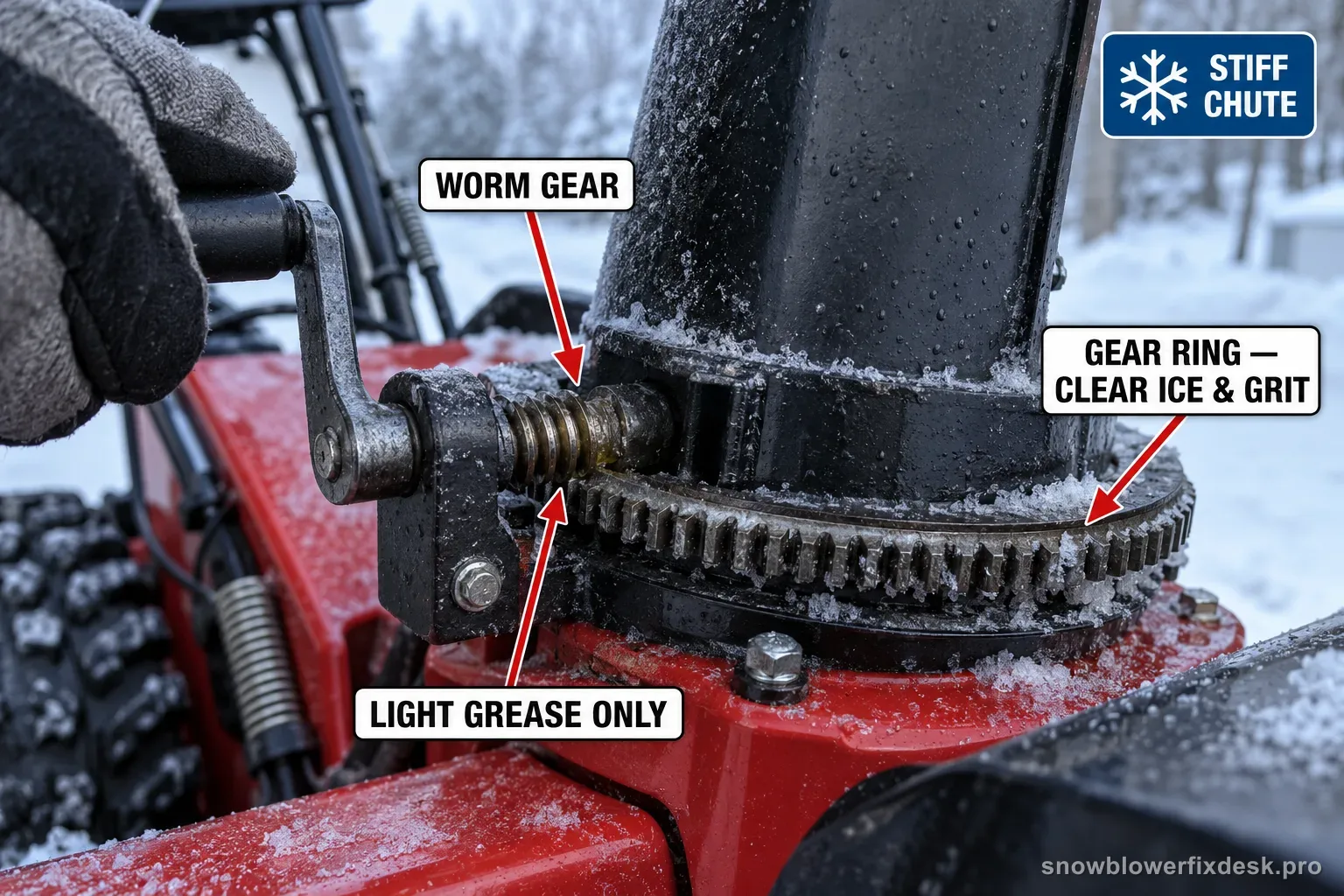
Applies to 2X 24 IntelliPOWER (31AM5HVRB10)
Identifiers: 31AM5HVRB10 · 2X 24 IntelliPOWER
Engine ID: 875-W0
Guide scope: Use only for Cub Cadet 2X 24 IntelliPOWER model 31AM5HVRB10, which the product page specifies with remote overhead-crank chute rotation. Do not apply joystick-style chute adjustments from another 2X generation.
Cub Cadet identifies this exact machine as 31AM5HVRB10. The product ID is 11 characters and is printed on the Product Identification Label.
This model uses a remote overhead crank, not a joystick-style chute. First rule out packed snow/ice and obvious crank/rod binding, then use the matched 31X operator-manual alignment procedure rather than forcing the control.
Stop the engine, remove the key and wait for all moving parts to stop before touching the chute, crank linkage or control rod.
Diagnostic sequence
Work in order. The early checks are intentionally low-disassembly and model-specific; stop once the symptom changes or the fault is confirmed.
Confirm the control type
Why this check: 31AM5HVRB10 is specified with remote overhead-crank chute rotation and 200° travel.
What to do: Do not follow a joystick/trigger-control adjustment from another 2X model.
Remove snow and ice safely
Why this check: Freeze-up around the chute base can make a correctly assembled crank feel mechanically seized.
What to do: Use the clean-out tool for packed snow and allow frozen components to thaw; never force the crank against solid ice.
Inspect crank rod and chute-base movement
Why this check: A bent, disconnected or binding control rod changes the feel across the whole rotation arc.
What to do: With the machine disabled, look for obvious disconnection/binding and compare assembly to the exact operator manual.
Check whether resistance occurs at one point or everywhere
Why this check: A local bind suggests a different mechanical path than uniform heavy resistance.
What to do: Do not power through the tight point; preserve the location and inspect alignment/teeth under the manual procedure.
Escalate before gear damage
Why this check: Forcing a frozen or misaligned chute can turn a minor control problem into damaged gearing.
What to do: If thawing and obvious linkage checks do not restore smooth travel, use matched service guidance or a dealer.
How to read this symptom on this model
The exact product page says this model uses remote overhead-crank chute rotation with 200 degrees of travel. That is the first compatibility gate: troubleshooting for joystick or trigger chute systems on other machines should not be transferred to this model.
Resistance caused by frozen snow at the chute base feels different from a disconnected or bent crank linkage, and a tight spot at one position can indicate a local alignment/binding issue. Preserving where and when the resistance appears is more useful than forcing the crank until something moves.
The exact 31AM5HVRB10 product specification gives two useful identity facts: this machine uses a remote overhead crank, and Cub Cadet specifies 200 degrees of chute rotation in about 2.5 turns of the crank. That creates a practical baseline without inventing a force specification. A control that suddenly needs excessive effort, binds at one point, or turns freely without moving the chute is not behaving like a normal overhead-crank system.
Map the resistance before disassembly. Uniform stiffness through most of the arc suggests freeze-up, contamination at the chute base or a generally tight linkage. A hard stop or rough spot at one repeatable position gives more weight to local alignment, damaged teeth or a bent rod. A crank that spins or moves with very little resistance while the chute stays put suggests lost motion or disconnection instead of a frozen chute. These patterns point to different inspections even though the search query is the same.
Snow and ice must be ruled out without forcing the control. The model uses a polymer chute and a mechanical crank path; forcing a frozen assembly can turn a temporary winter condition into damaged teeth, brackets or linkage. Shut the engine down, remove the key, allow moving parts to stop, and clear or thaw the chute base before deciding the mechanism itself is defective.
Do not import joystick, trigger or electric-chute instructions from another Cub Cadet 2X. The product page identifies 31AM5HVRB10 specifically as remote overhead crank. If the visible rod or gear relationship does not match the matched 31X operator manual/parts diagram, stop and re-check the 11-character Product Identification Label before buying an assembly.
Start by deciding whether the crank is hard everywhere or only at one point. Uniform stiffness that improves after thawing supports ice or packed snow around the chute base. A repeatable hard spot at the same angle on a dry machine is more consistent with misalignment, debris or damaged control hardware. With the engine off, clear accessible ice and move the chute slowly through its range before changing any rod or cable adjustment.
Do not use extra leverage on the crank to overcome a bind. The 31AM5HVRB10 support material covers a specific chute-control arrangement, and forcing a misaligned rod or gear can convert an adjustment issue into broken hardware. Compare the visible rod/bracket engagement with the matched parts diagram and correct only what is clearly out of position. If the chute still binds after external snow is removed and the linkage is seated correctly, stop at the service path rather than bending the control to make it fit.
Use the shape of the resistance to decide what to inspect next. Uniform heavy effort through most of the 200-degree travel is consistent with freeze-up or a generally binding crank path, while one repeatable hard spot at the same chute angle points more strongly to local rod, gear, or alignment trouble. Thaw the base completely before making that comparison. If the hard spot remains dry and repeatable, stop forcing the overhead crank; note the exact angle and direction of the bind and take that evidence into the 31AM5HVRB10 parts/service view.
Before you order parts
Do not order a chute gearbox or control rod until ice is ruled out and the visible crank/rod connection is compared with the exact operator manual. If a component is visibly bent or teeth skip at one point, use the model-matched parts diagram rather than a generic 2X assembly.
Before ordering a chute gearbox, crank rod or chute base, inspect whether the resistance changes after all packed snow and ice are removed. Then compare the linkage to the exact 31AM5HVRB10 parts/manual view. Buying a complete chute-control assembly because the crank felt stiff once in freezing weather is a poor evidence threshold.
Do not lubricate random polymer or gear surfaces unless the matched manual calls for it. The correct repair for ice, a bent rod, a disconnected joint and a damaged gear are not interchangeable, and an unapproved lubricant can attract grit or change how polymer parts behave in cold conditions.
Back to the exact model hub →Retest without creating a second problem
With the machine off, verify that the chute can move through its intended arc without a hard bind after correction. Then perform the powered snow test only from the operator position. Stop if the crank again hits a hard mechanical stop; repeated force can turn alignment trouble into broken gear teeth.
With the engine off, rotate the chute through the usable arc slowly and note whether resistance is smooth and repeatable. Do not use the physical end of travel as a reason to keep applying torque. The goal is a control that moves the chute predictably without a hard bind, not maximum force at the stops.
After the static check passes, run the machine only from the operator position and redirect the chute before entering a light snow load. If rotation becomes difficult again only after snow packs around the base, the environmental/freeze branch remains stronger than a failed crank assembly.
Make sure this is the right symptom
The same search phrase can lead to a different branch on another machine. Compare the nearest model-specific examples: Ariens Deluxe 24 (921069): chute won't stay · Toro Power Clear 721 QZE (38756): Quick Shoot chute won't turn / stiff or unequal travel.
Model-specific notes
- The product page confirms overhead-crank rotation and a high-impact polymer chute.
- Do not borrow Quick Shoot or joystick troubleshooting from Toro or other Cub Cadet models.
Questions people get wrong on this model
Does this exact model use trigger-controlled chute rotation?
No. Cub Cadet lists a remote overhead crank for chute rotation; trigger controls are used for power steering. 31AM5HVRB10 is specified with remote overhead-crank chute rotation and 200° travel. Freeze-up around the chute base can make a correctly assembled crank feel mechanically seized. Do not order a chute gearbox or control rod until ice is ruled out and the visible crank/rod connection is compared with the exact operator manual.
Should I lubricate the chute with any spray I have?
Use only lubrication/maintenance guidance from the exact operator manual; random products can attract grit or affect polymer components. Do not lubricate random polymer or gear surfaces unless the matched manual calls for it. Do not order a chute gearbox or control rod until ice is ruled out and the visible crank/rod connection is compared with the exact operator manual.
Why does the exact chute-control type matter before adjustment?
This model is specified with a remote overhead crank and 200-degree chute travel. A joystick or trigger-control adjustment from another 2X model can send you to the wrong linkage, so confirm 31AM5HVRB10 before changing hardware. Freeze-up around the chute base can make a correctly assembled crank feel mechanically seized.
Primary-source trail
Manufacturer material used for this diagnosis. Verify the model/serial range before ordering parts or applying an adjustment.
Cub Cadet 2X 24 IntelliPOWER product + manual pageExact model 31AM5HVRB10, engine 875-W0, friction-disc drive, overhead-crank chute and official manual forms 769-26924, 769-26938 and 769-26795.www.cubcadet.com →Cub Cadet operator-manual lookupOfficial manual resolver. Enter the exact 11-character product ID and serial number before using an engine or snowblower manual revision.www.cubcadet.com →Cub Cadet: Clean Out a Clogged Snow Blower ChuteOfficial shutdown and clean-out-tool sequence for snow/ice blockage.www.cubcadet.com →