Toro Power Clear 721 E Belt Squeals or Rotor Feels Weak Under Load
Use the Toro control-cable gap and wet-belt notes before replacing parts.
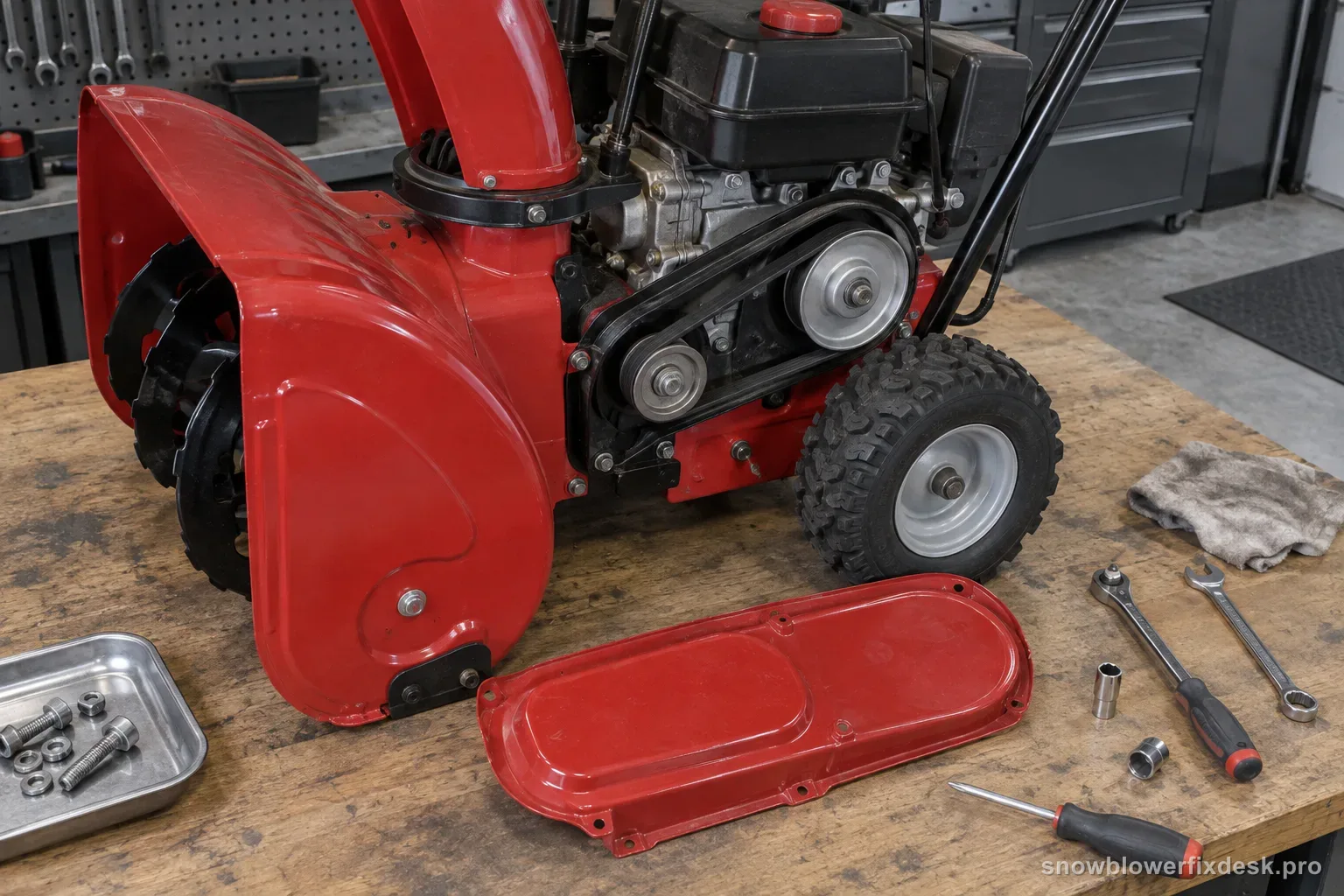
Applies to Power Clear 721 E (38753)
Identifiers: 38753 · 721 E
Engine ID: Toro 212cc
Guide scope: Use this guide for Toro Power Clear 721 E model 38753 serial 406836564+ under operator manual 3439-829. Earlier serial 400000000–406836563 uses manual 3429-269; do not transfer 38756 Quick Shoot control assumptions into this 38753 drive-cable diagnosis.
Model 38753 spans multiple serial ranges. Use the serial resolver below before assuming a manual or parts catalog.
This model has serial-range boundaries — resolve the serial before using a manual →
721 E 38753 is not the QZE 38756
This diagnosis is scoped to model 38753. The sibling 38756 is the 721 QZE and adds the Quick Shoot chute-control context, so confirm the model/serial label before using a parallel-looking QZE procedure.
Toro notes that drive-belt slip can develop as the belt wears, and wet conditions can cause temporary squeal. Cable adjustment is part of the diagnosis.
Shut off the engine, remove the key and wait for the rotor to stop before inspecting or adjusting the control cable.
Diagnostic sequence
Work in order. The early checks are intentionally low-disassembly and model-specific; stop once the symptom changes or the fault is confirmed.
Wet-only squeal
Why this check: Toro explicitly notes that the belt may slip and squeal in wet conditions.
What to do: Run the rotor without load for about 30 seconds as the manual describes to dry the drive system, then reassess.
Control-bar gap
Why this check: The manual specifies a 2–3 mm (1/16–1/8 in) gap and requires some slack when disengaged.
What to do: Measure the gap with the control bar pulled back to remove cable slack.
Adjuster position
Why this check: The Z-fitting and spring position control cable/belt engagement.
What to do: Follow the manual adjustment steps rather than simply removing all slack.
Persistent slip
Why this check: Extended use can wear the belt beyond normal adjustment.
What to do: If correct adjustment cannot stop continuous slip under load, inspect/replace the belt per Toro service guidance.
How to read this symptom on this model
A brief belt squeal in wet conditions is not the same diagnosis as a rotor that is consistently weak in dry snow. Toro notes that moisture can cause temporary belt noise, while belt wear and cable adjustment can reduce drive transfer more persistently. The useful observation is when the symptom occurs: only after wet snow, only under heavy load, or even with the machine dry and unloaded.
The control-bar gap gives this diagnosis a concrete baseline. Toro specifies a 2 mm to 3 mm (1/16 to 1/8 inch) gap between the control bar and handle when cable slack is removed for the check. The manual also says the control cable must retain some slack when the bar is disengaged so the rotor blades can stop properly. More tension is therefore not automatically better.
Toro separates wet-belt squeal from wear. For a belt that squeals in wet conditions, the manual says to run the rotor without load for 30 seconds to dry the drive system. If the noise disappears after that drying run and normal rotor speed returns, moisture is stronger evidence than an immediately failed belt.
Extended use can change belt tension. Toro notes that if the drive belt continuously squeals under heavy load after wear develops, the upper end of the spring can be moved to the alternate hole farther from the control-bar pivot, followed by control-cable adjustment. That is a specific service path, not a reason to keep shortening the cable until the rotor cannot disengage.
Rotor weakness without squeal also deserves a load comparison. A rotor that sounds normal unloaded but falls off sharply in ordinary light snow points toward transfer/tension more than a completely broken belt. A rotor that performs normally in light snow but struggles only when the machine is overfed may simply be overloaded. Standardize snow depth and travel pace before calling a belt weak.
If the belt becomes quiet after the manual's wet-drive drying step but snow pickup still feels weak, do not keep adding cable tension automatically. The same Toro manual gives the rotor blades a wear-indicator hole and calls for dealer replacement of the rotor blades and scraper when that hole is exposed. That creates a separate wear branch: belt noise that responds to drying or tension is drive evidence, while visibly worn rotor edges can reduce snow-handling performance even when the belt is no longer squealing. Preserve both observations before choosing a part path.
On Power Clear 721 E (38753), the order between “Wet-only squeal” and “Control-bar gap” matters because each answers a different question. Toro explicitly notes that the belt may slip and squeal in wet conditions. Meanwhile, the manual specifies a 2–3 mm (1/16–1/8 in) gap and requires some slack when disengaged. Preserve which check passed and which did not before moving deeper. That record is especially useful when the owner describes everything simply as “belt squeals or rotor weak,” because the phrase alone does not identify the failed branch.
A wet belt can behave differently from a worn or misadjusted drive. Note whether the squeal appears only during a heavy, wet bite and disappears after the machine dries, or whether it repeats under ordinary load. Then compare rotor response with the control-bar cable in the correct range. A dry, repeatable squeal with weak rotor speed is stronger belt/cable evidence than one short noise in slushy snow, especially if the rotor still stops normally when the bar is released.
Judge belt evidence only after the rotor can turn freely and the control-bar relationship is correct for the confirmed serial/manual generation. A squeal that appeared while the housing was packed with refrozen snow may disappear once the rotor is free; tightening the cable in that situation can create drag and delayed stopping. A dry, repeatable squeal with weak rotor speed under ordinary load is stronger drive-transfer evidence, especially if the released control still has the specified slack. After any adjustment, the rotor must both pull strongly and stop as intended when the bar is released. Noise reduction alone is not a successful repair if the safety stop has been compromised.
Before you order parts
Before ordering a belt, check the cable gap against the Toro specification and confirm the rotor stops when the control bar is released. If the squeal occurs only in wet conditions, perform the manual’s 30-second unloaded drying run first. Those checks can prevent a good belt from being replaced for moisture or cable adjustment.
Inspect the belt path only with the engine off, key removed and all movement stopped. Look for glazing, fraying, cracking, rubber debris or a belt that is not tracking correctly. Do not spray belt dressing, oil or lubricant into the drive to quiet noise; contamination can change friction and make disengagement less predictable.
If you adjust spring position or cable tension, return to the 2–3 mm gap check rather than judging by “stronger pull.” The safety endpoint matters as much as drive strength: the rotor must disengage and stop normally when the bar is released. A machine that throws better but keeps the rotor engaged has not been repaired correctly.
Back to the exact model hub →Retest without creating a second problem
After cable or belt work, test engagement and disengagement separately. With the chute aimed safely, run the rotor briefly with no snow, release the bar and verify it stops. Listen for continuous squeal after the system is dry; persistent noise under no load deserves another inspection before snow testing.
Then make a short pass in light, ordinary snow. Use the same width and pace for comparison so you are testing the repair rather than changing the load. If the rotor remains strong and the belt stays quiet, repeat once under a modestly heavier load; do not jump directly to packed end-of-driveway snow as the first test.
Finish by releasing the control bar and confirming the rotor stop again. If the cable adjustment that removed the squeal also removed the required slack or delayed stopping, back out the adjustment and correct it. Full drive transfer and safe disengagement are both required for a pass.
Make sure this is the right symptom
The same search phrase can lead to a different branch on another machine. Compare the nearest model-specific examples: Ariens Deluxe 24 (921069): belt squeals continuously · Toro Power Clear 721 QZE (38756): rotor keeps spinning after control bar release.
Model-specific notes
- Too-tight adjustment is a safety problem because the rotor must stop when the control bar is released.
- A squeal only during wet snow is different from continuous dry-condition belt slip.
Questions people get wrong on this model
Should the cable be completely tight when released?
No. Toro says the cable must retain some slack when disengaged so the rotor blades stop properly. If you adjust spring position or cable tension, return to the 2–3 mm gap check rather than judging by “stronger pull.” The safety endpoint matters as much as drive strength: the rotor must disengage and stop normally when the bar is released.
Can I just move the spring to maximum tension?
No. The alternate spring hole is a wear-compensation step, not a maximum-tension setting. After moving the spring, re-measure the 2–3 mm control-bar gap and confirm the released bar still leaves slack. If dry-load squeal continues with correct adjustment, inspect the belt instead of adding more tension.
What if the rotor keeps moving too long after the control bar is released?
Treat that as a control-cable/brake safety problem, not as a reason to add more tension for stronger drive. The released control must still leave the correct slack and allow the rotor to stop normally before the machine returns to use. Before ordering a belt, check the cable gap against the Toro specification and confirm the rotor stops when the control bar is released.
Primary-source trail
Manufacturer material used for this diagnosis. Verify the model/serial range before ordering parts or applying an adjustment.
Toro Power Clear 721 Operator Manual 3439-829 Rev BOfficial current operator manual covers model 38753 serial 406836564 and up; includes the 2–3 mm control-cable gap, disengaged-cable slack requirement, rotor-blade wear indicator and blades-plus-scraper replacement boundary.www.toro.com →Toro Power Clear 721 Interactive Operator ManualOfficial interactive manual for the same later 38753 generation, with control-cable, rotor-stop, wear, fuel, starting and freeze-up guidance.manuals.toro.com →Toro 38753 Parts & Manuals — current serial rangeOfficial current-range model page confirms 38753 serial 416153644+ still uses operator manual 3439-829 / 3439-830.www.toro.com →Toro 38753 product page — serial-range resolverOfficial product page exposes the model 38753 serial-range selector so later manual coverage can be resolved before applying an adjustment or replacement decision.www.toro.com →