Toro Power Clear 721 E 38753 Won't Start Cold: Correct Sequence First
A no-start guide built around Toro’s 721 manual, including primer/choke behavior and electric-start limits.
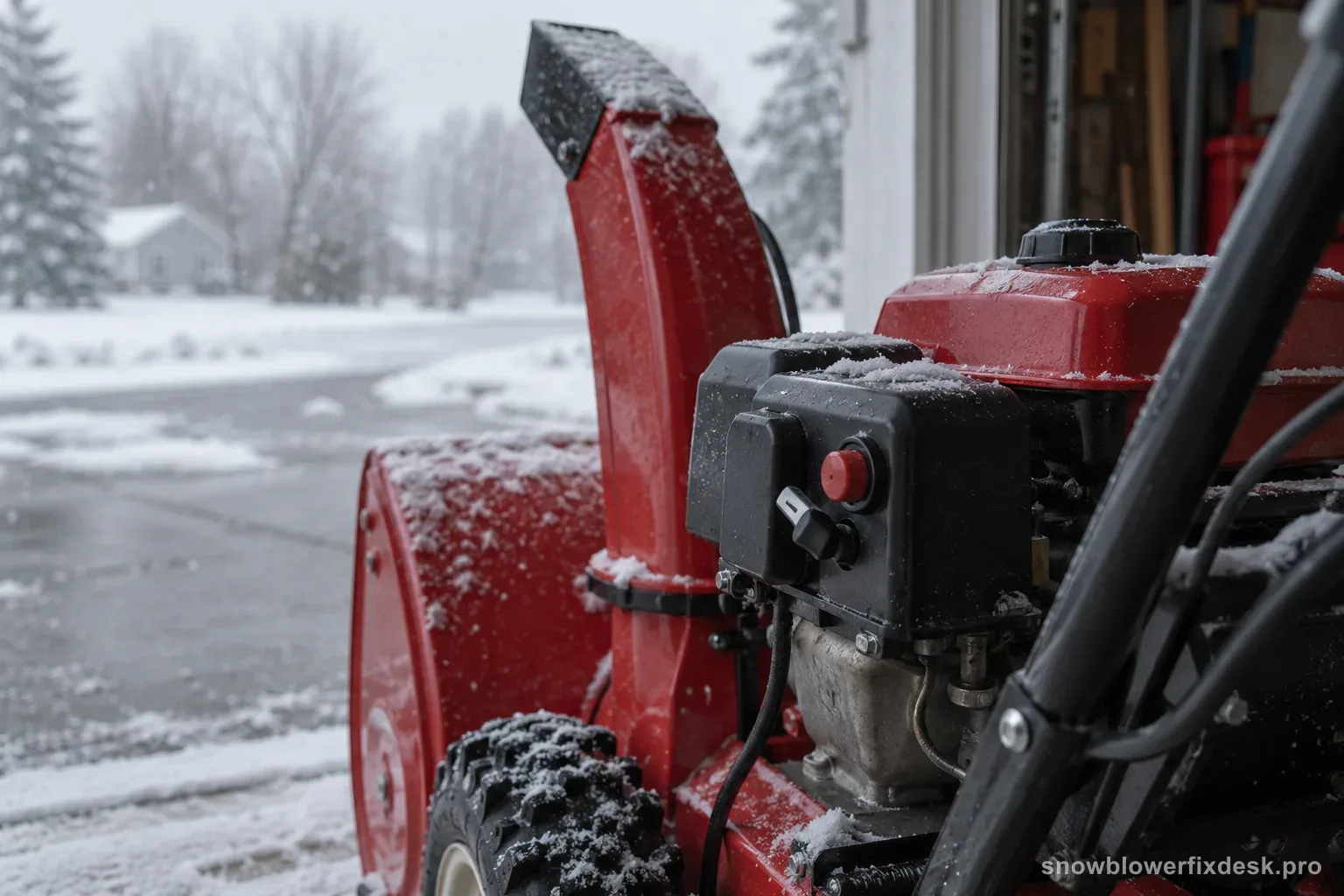
Applies to Power Clear 721 E (38753)
Identifiers: 38753 · 721 E
Engine ID: Toro 212cc
Guide scope: Applies to model 38753 serial 406836564 and up under the later Toro 721 operator-manual path. Earlier serial 400000000–406836563 uses manual 3429-269; resolve the serial before applying later electric-start limits.
Model 38753 spans multiple serial ranges. Use the serial resolver below before assuming a manual or parts catalog.
This model has serial-range boundaries — resolve the serial before using a manual →
721 E 38753 is not the QZE 38756
This diagnosis is scoped to model 38753. The sibling 38756 is the 721 QZE and adds the Quick Shoot chute-control context, so confirm the model/serial label before using a parallel-looking QZE procedure.
On a cold 721, verify fresh fuel, key, primer/choke sequence and starter procedure before diagnosing deeper engine faults.
Use outdoors. Gasoline vapors and engine exhaust are hazardous; inspect the electric-start cord before use.
Diagnostic sequence
Work in order. The early checks are intentionally low-disassembly and model-specific; stop once the symptom changes or the fault is confirmed.
Fuel freshness
Why this check: Toro specifies clean, fresh fuel no more than 30 days old.
What to do: If fuel is old, follow proper fuel service rather than topping off stale gasoline.
Key, primer and choke sequence
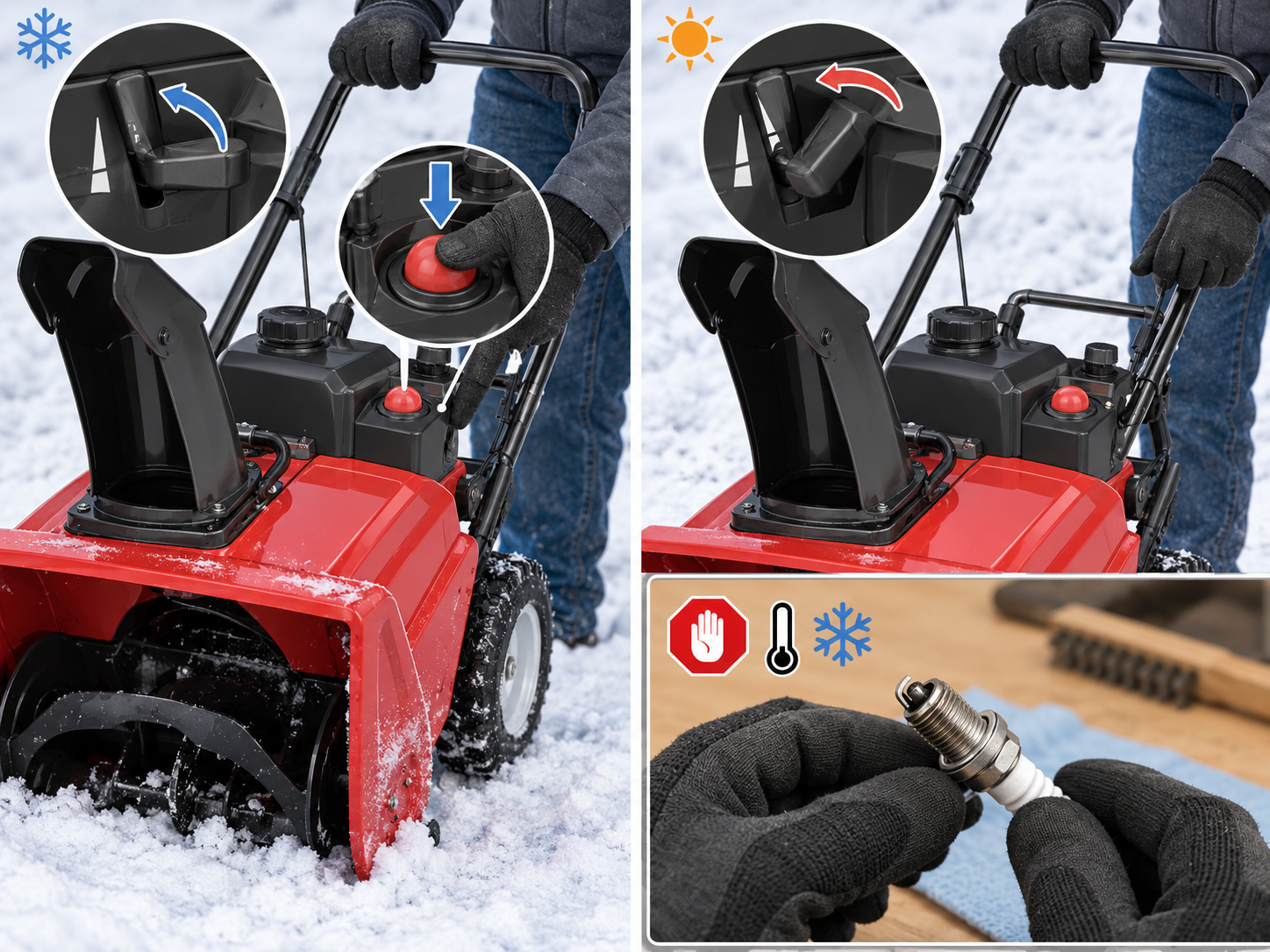
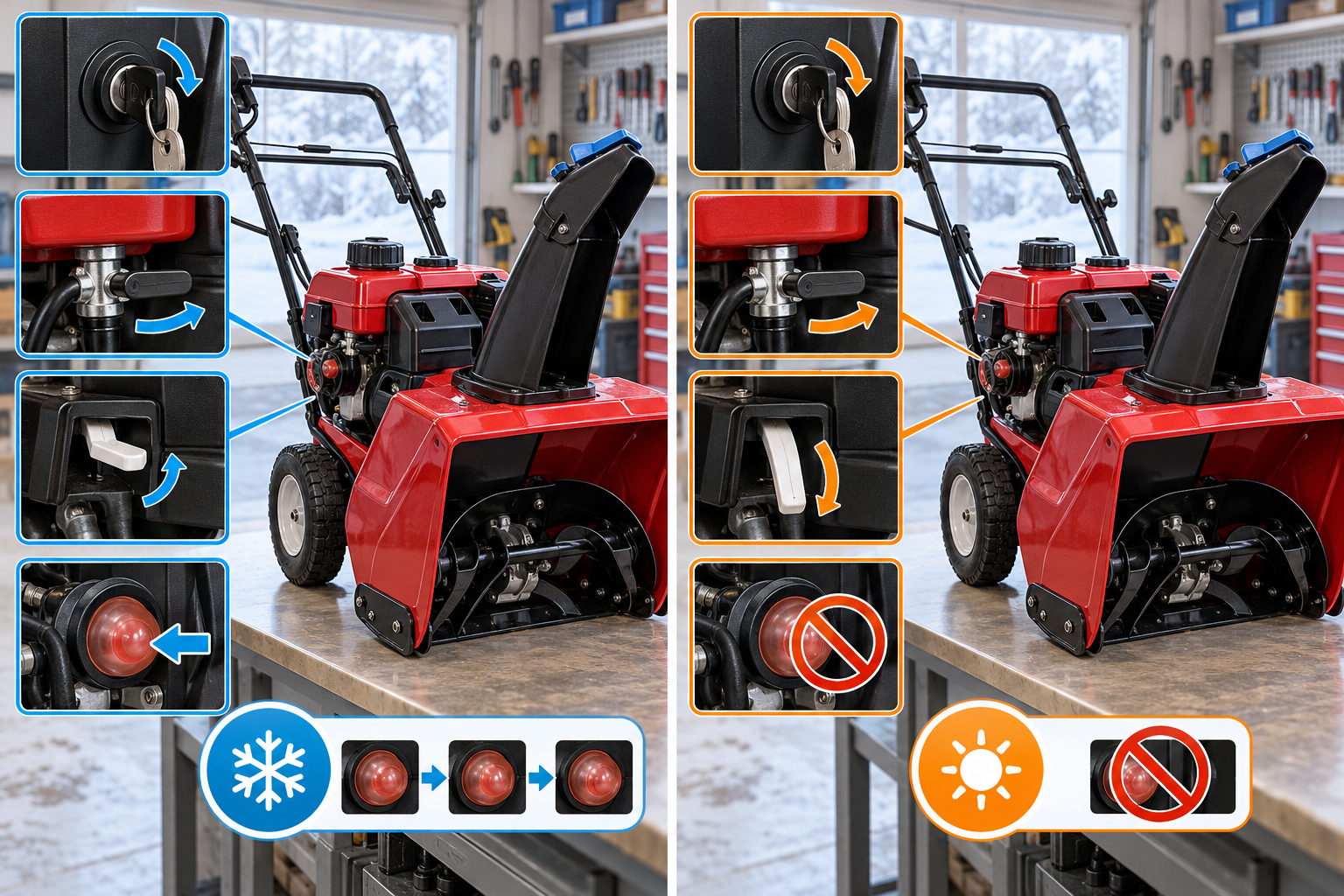
Why this check: The manual’s start decal specifies key in, primer three times and choke for a cold engine.
What to do: Use the sequence exactly. Remove your glove when pressing the primer so the primer hole seals.
Avoid hot-engine over-priming
Why this check: Toro warns that primer/choke use on a hot engine can flood it.
What to do: If the engine was just running, do not repeat the cold-start priming routine.
Electric starter duty cycle
Why this check: Overcranking can overheat the starter.
What to do: Use no more than the manual’s specified short attempts; allow the stated cool-down before another series.
Cold start and warm restart use different evidence
Toro’s model 38753 operator manual gives the control sequence and a service stop point after repeated attempts. A cold-start complaint should be recorded separately from a warm restart that becomes flooded or from an engine that fires and immediately stops.
| When it fails | Record this before changing anything | Branch |
|---|---|---|
| First start when fully cold | Fuel age, key, primer response, choke position, recoil/electric response | Follow the cold-start sequence exactly once before repeating. |
| Warm restart after a short stop | Whether it was primed/choked again and whether it briefly fires | Do not assume the cold-start enrichment step applies unchanged. |
| Fires, then dies | How long it runs and whether choke position changes it | Move to the starts-then-dies path instead of repeating a no-start routine. |
| Still no start after the manual’s attempt limit | Fuel/control checks already completed | Stop repeated cranking and contact an authorized service dealer. |
How to read this symptom on this model
A cold-start complaint on the Toro Power Clear 721 E should begin with the manual generation for model 38753, then with the cold-start sequence itself. Later 38753 documentation gives a defined order for key, primer and choke, and it also separates an electric-starter problem from an engine that cranks but will not fire. That distinction is the most useful first note: “starter will not turn the engine” and “engine turns normally but never ignites” are different faults even though both are described as won’t start.
Fuel age matters more in a cold diagnosis than a quick visual check of the tank. Toro instructs owners to use fresh fuel and its troubleshooting material treats stale fuel as a no-start or poor-running cause. If the machine has been sitting, record when the fuel was purchased before adding more primer cycles. A machine that starts after fresh fuel and the correct cold controls has already provided stronger evidence than a carburetor guess based only on temperature.
For a genuinely cold engine, use the primer and choke as specified; do not carry the same enrichment routine over to a warm restart. Over-priming a warm engine can create flooding and make the original symptom harder to read. If the engine turns and a strong fuel smell builds after repeated attempts, stop adding fuel to the cylinder and allow the condition to clear rather than treating every failed attempt as proof that it needs more primer.
The electric starter also has a duty cycle. Toro directs short attempts rather than holding the starter continuously; the 721 manual specifies repeated 5-second cranking/rest intervals and limits the number of attempts before a longer cooling period. Use a proper outdoor extension cord and a GFCI-protected source where the matched manual requires it. A starter that becomes hot or slows after continuous cranking can become a second problem layered on top of the original cold no-start.
For later 38753 machines, Toro makes the electric-start setup unusually specific: connect the machine first, then a GFCI outlet, using an outdoor UL-listed 16-gauge cord no longer than 50 ft. Crank in 5-second-on/5-second-off intervals for no more than 10 attempts, then allow at least 40 minutes of cooling before another series. Those limits matter diagnostically because a weak or overheated starter after prolonged cranking is not clean evidence about the original fuel/ignition no-start.
Keep the end state of each start attempt in the diagnosis. If the engine finally fires and then dies as the choke is moved toward RUN, that is no longer the same evidence as a cold engine that never fired at all; preserve it for the later run-quality branch instead of repeating the cold-start routine. Likewise, if recoil starts the engine while electric start does not, the machine has separated the starter circuit from the fuel/ignition path. One clean observation after the correct sequence is more useful than several mixed attempts with changing primer, choke and starter conditions.
Cold-start diagnosis is easier when the engine temperature is treated as part of the symptom. On a genuinely cold 38753, follow Toro’s key, primer and choke sequence once as written, then note whether the engine fires. If it was recently running, do not keep repeating the cold enrichment routine; excess primer/choke can flood a warm engine and create a second no-start condition. A machine that cranks normally but never fires after the correct cold sequence should move toward fuel-quality and ignition evidence rather than more enrichment.
Use temperature history to avoid turning a cold-start problem into a flooded-engine problem. The Toro 721 manual uses primer and choke for a cold engine but specifically warns against using them on a hot engine. If the machine was running recently, or has already fired and stopped during diagnosis, do not keep repeating the original cold-start sequence. Let the actual engine state determine the next attempt. This is especially useful when an owner reports that the 721 starts on the first cold attempt but becomes harder to restart after several heavily primed tries.
Treat fuel age and engine temperature as two separate inputs on the later-serial 38753. Toro calls for fresh fuel no more than 30 days old, and its starting instructions use primer and choke for a cold engine but omit them when the engine is hot. That means a first-morning no-start with month-old fuel is not the same problem as a warm engine that was repeatedly primed after it had already fired. Before escalating, replace questionable fuel, set the controls for the engine’s actual temperature and make one clean attempt. If the engine fires briefly, note whether it dies as choke is reduced; that belongs on the starts-then-dies path rather than being folded into a generic cold no-start.
If using the electric starter, keep the starter test within Toro’s own duty cycle so the diagnostic process does not overheat the starter. The later manual limits each crank to about five seconds, calls for a five-second pause between attempts and, after ten attempts, a much longer cool-down period. A starter that spins the engine normally has already answered one question: the next evidence should come from combustion, fuel and ignition, not longer cranking. If the electric starter does not turn the engine, verify the approved outdoor cord/GFCI supply and use the starter-specific branch rather than continuing to add primer or choke.
Before you order parts
Before ordering a carburetor, ignition part or starter, write down the 38753 serial range/manual generation, fuel age, whether recoil can turn the engine, and whether the electric starter turns it at normal speed.
Do not keep priming simply because the engine failed to start. Cold and warm start instructions differ, and a flooded cylinder can mimic the no-start you are trying to fix.
If the electric starter is the only failed path but recoil cranks and starts the engine normally, keep that evidence in the starter-circuit branch. Do not replace fuel-system parts to solve an electrical cranking symptom.
Resolve serial 406836564+ before applying the later interactive-manual sequence. If the machine is in the earlier 400000000–406836563 range, use manual 3429-269 instead of silently carrying later starter details backward across Toro's published manual boundary.
Back to the exact model hub →Retest without creating a second problem
After correcting fuel or start-control conditions, perform one clean cold-start test from the beginning rather than after a series of partial attempts. Use the matched key/primer/choke sequence, then return the choke as the engine starts and warms.
If electric start is being tested, respect the short duty cycle and cooling interval. If the engine still will not fire while it cranks normally on both starter paths with fresh fuel and the correct controls, stop random part replacement and continue with the spark/engine branch in the matched Toro documentation.
Make sure this is the right symptom
If your machine is showing an adjacent symptom instead, switch paths before changing parts: electric starter not working · starts then dies or needs choke.
The same search phrase can lead to a different branch on another machine. Compare the nearest model-specific examples: Ariens Deluxe 24 (921069): won't start · Ariens Deluxe 24 (921069): starts hard or runs poorly.
Model-specific notes
- The interactive manual covers model 38753 serial 406836564 and up.
- High-altitude operation has a separate carburetion kit requirement; do not apply that setup at low altitude.
Questions people get wrong on this model
How many times should I prime a cold 721?
Toro’s start decal/manual sequence calls for three primer presses for the covered model range. The manual’s start decal specifies key in, primer three times and choke for a cold engine. Cold and warm start instructions differ, and a flooded cylinder can mimic the no-start you are trying to fix.
Why did repeated priming make it worse?
Excessive priming can flood a warm engine and prevent starting. Toro warns that primer/choke use on a hot engine can flood it. Do not keep priming simply because the engine failed to start. If the engine was just running, do not repeat the cold-start priming routine.
Should a warm restart use the same primer and choke routine as a cold start?
No. The covered Toro manual distinguishes cold starting from warm restarting. Repeating the cold-start enrichment on a hot engine can flood it, so preserve engine temperature and what controls were used as part of the diagnosis. The manual’s start decal specifies key in, primer three times and choke for a cold engine.
Primary-source trail
Manufacturer material used for this diagnosis. Verify the model/serial range before ordering parts or applying an adjustment.
Toro Power Clear 721 Operator Manual 3439-829 Rev BOfficial current operator manual covers model 38753 serial 406836564 and up; includes the 2–3 mm control-cable gap, disengaged-cable slack requirement, rotor-blade wear indicator and blades-plus-scraper replacement boundary.www.toro.com →Toro Power Clear 721 Interactive Operator ManualOfficial interactive manual for the same later 38753 generation, with control-cable, rotor-stop, wear, fuel, starting and freeze-up guidance.manuals.toro.com →Toro 38753 Parts & Manuals — current serial rangeOfficial current-range model page confirms 38753 serial 416153644+ still uses operator manual 3439-829 / 3439-830.www.toro.com →Toro 38753 product page — serial-range resolverOfficial product page exposes the model 38753 serial-range selector so later manual coverage can be resolved before applying an adjustment or replacement decision.www.toro.com →