Toro 721 QZE 38756 Rotor Does Not Stop: Control-Cable Gap and Slack
A stop-use 721 QZE path for a rotor that keeps turning after the control bar is released, using Toro’s 2–3 mm cable-gap and disengaged-slack requirements.
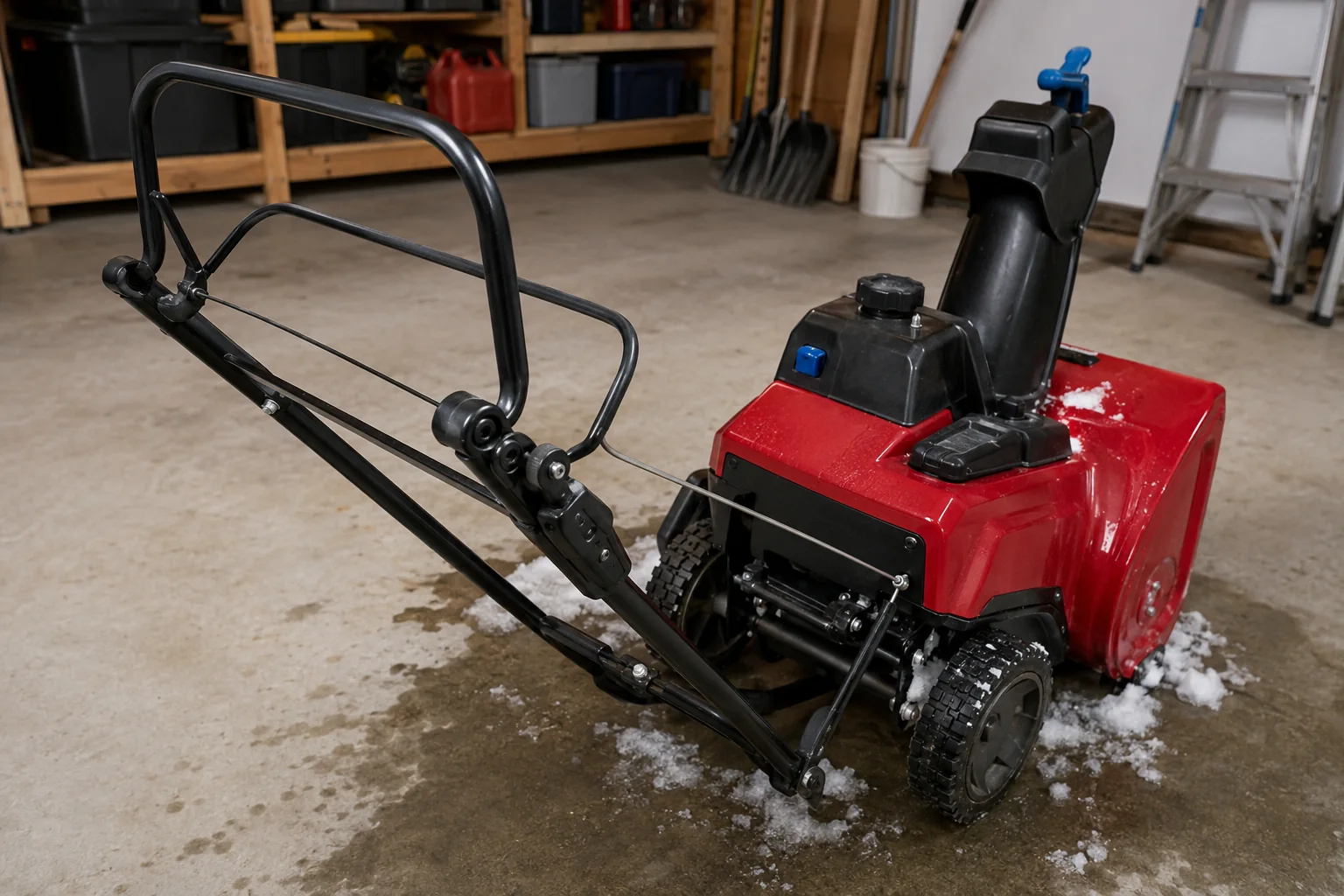
Applies to Power Clear 721 QZE (38756)
Identifiers: 38756 · 721 QZE
Engine ID: Toro 212cc
Guide scope: The 2–3 mm control-bar gap and cable-adjustment details on this page are scoped to model 38756 serial 406728558+ under Toro operator manual 3439-829. Earlier 400000000–406728557 machines use manual 3429-269; resolve the serial before adjustment.
Model 38756 spans six verified serial ranges. Resolve the serial number before using manual or parts assumptions.
This model has serial-range boundaries — resolve the serial before using a manual →
721 QZE 38756 has its own chute-control context
This diagnosis is scoped to model 38756, the QZE variant with Quick Shoot. If the label says 38753, use the 721 E path rather than assuming the two pages are interchangeable.
For later 38756 machines, Toro requires a 2–3 mm (1/16–1/8 in) gap during the control-cable check and explicitly says the cable must retain some slack when the control bar is disengaged so the rotor blades stop properly. A rotor that keeps spinning after release is a stop-use fault, not a reason to add more tension.
If the rotor keeps moving after the control bar is released, shut the engine off, remove the key and stop using the machine until the control/cable condition is corrected. Never approach the rotor or chute while any part is moving.
Diagnostic sequence
Work in order. The early checks are intentionally low-disassembly and model-specific; stop once the symptom changes or the fault is confirmed.
Resolve model 38756 and serial range
Why this check: Toro changes operator manuals within model 38756, and the 2–3 mm adjustment belongs to the later 3439-829 range.
What to do: Read the model/serial decal. Use this exact adjustment only for serial 406728558 and up; route earlier machines to manual 3429-269.
Treat continued rotor motion as a stop-use fault
Why this check: The control bar is the operator’s disengagement control; Toro states the rotor blades must be able to stop properly when the bar is released.
What to do: Do not keep clearing snow to “see if it gets better.” Shut the engine off, remove the key, wait for all movement to stop and inspect only after the machine is safe.
Check the control-bar gap
Why this check: Manual 3439-829 specifies a 2–3 mm (1/16–1/8 in) gap between the control bar and handle when the slack is removed for the check.
What to do: With the machine off, move the control bar back toward the handle only enough to remove cable slack, then compare the gap with the matched manual.
Confirm disengaged cable slack remains
Why this check: Toro explicitly warns that the control cable must contain some slack when the control bar is disengaged so the rotor blades can stop properly.
What to do: If prior adjustment removed all released-bar slack, do not add more tension. Correct the cable according to the matched adjustment procedure.
Use the Z-fitting adjustment in the correct direction
Why this check: Toro’s procedure moves the Z-fitting among holes on the adjuster link: higher decreases the gap; lower increases it.
What to do: Adjust only enough to restore the specified gap and disengaged slack, then reconnect the spring and recheck before starting the engine.
Escalate if the cable condition is correct but the rotor still will not stop
Why this check: A safe control setting that still cannot stop the rotor means the owner-level cable check has not resolved the fault.
What to do: Stop using the machine and take the exact model/serial plus the measured gap and released-bar behavior to an Authorized Toro Service Dealer.
How to read this symptom on this model
Do not treat a rotor that keeps moving after control-bar release as a minor performance problem. On the later 38756 manual, the control-cable check exists partly to preserve stopping behavior: Toro specifies a 2–3 mm gap between the control bar and handle during the cable check and then states that the cable must still contain some slack when the bar is disengaged so the rotor blades can stop properly. Those two conditions have to coexist.
The first useful question is whether the symptom began after a cable adjustment or after the first hours of use. Toro schedules a cable check after the first hour and yearly, which reflects expected settling/stretch in the control system. If the rotor started hanging on immediately after someone “tightened the cable for more bite,” excessive tension becomes especially important evidence because removing released-bar slack can compromise stopping.
Measure rather than tightening by feel. With the engine off, the control bar is moved toward the handle only enough to remove slack for the gap check. The 2–3 mm figure is not a target for how tightly the rotor should engage under power; it is a reference condition in the control setup. A cable can be tight enough to engage well and still be incorrectly adjusted if the rotor does not disengage.
Toro’s Z-fitting procedure changes the gap in a predictable direction. Moving the Z-fitting higher on the adjuster link decreases the gap; moving it lower increases the gap. That means a rotor that will not stop after over-tightening should not be “fixed” by moving farther in the same direction. Restore the matched gap and disengaged slack, reconnect the spring correctly and recheck before a powered test.
Keep belt-performance tuning separate from stopping behavior. Elsewhere in the same manual, Toro provides a spring-position change for a belt that continuously squeals under heavy load after extended use. That service path is not permission to remove all control-cable slack. If a previous belt-tension attempt coincided with the rotor-stop symptom, return to the complete control-cable check rather than focusing only on throwing performance.
Freeze-up can make the control bar or spring system feel abnormal, but ice should be corrected before adjustment. Toro warns not to use excessive force on frozen controls. A cable that tests normally after the machine thaws should not be shortened just because it was stiff during a refreeze event. Compare the dry condition before making a permanent adjustment.
If the correct gap/slack condition is restored and the rotor still continues turning after the bar is released, the owner-level cable branch is exhausted. Stop using the machine. A continued-rotation fault can involve other drive/control components and should be handled by an Authorized Toro Service Dealer rather than repeated powered trials near a live rotor.
Before you order parts
Before ordering a control cable, belt or rotor component, resolve model 38756 and the serial range, then document the control-bar gap and whether any released-bar slack is present. A measurement that is out of specification is stronger evidence than replacing the cable because the rotor keeps moving.
If a prior adjustment or belt-tension change immediately preceded the symptom, restore the matched control setup before buying parts. The sequence matters because a new cable installed with the same over-tensioned setting can reproduce the same unsafe behavior.
Do not use throwing distance as the pass/fail criterion for this repair. Safe disengagement comes first. A machine that throws farther but leaves the rotor spinning after release is less safe than before.
Back to the exact model hub →Retest without creating a second problem
With the machine reassembled and nobody near the rotor or discharge opening, start outdoors and engage the rotor briefly from the operator position. Release the control bar and observe only from the operating position. The rotor must stop normally; if it continues moving, shut the engine off immediately and end the test.
Repeat only after the control setup has been corrected and verified with the engine off. Do not make a snow-load pass until the no-load engagement/disengagement test is safe and repeatable.
If the rotor stops correctly after adjustment, make a short light-snow pass and release the control once more. A repair is complete only if the system both drives the rotor under load and disengages reliably afterward.
Make sure this is the right symptom
The same search phrase can lead to a different branch on another machine. Compare the nearest model-specific examples: Toro Power Clear 721 E (38753): belt squeals or rotor weak · Toro Power Clear 721 E (38753): rotor keeps spinning after control bar release.
Model-specific notes
- More control-cable tension is not automatically better. On this model, excessive tension can remove the slack Toro says is necessary for proper rotor stopping.
- The same later manual calls for checking the control cable after the first hour and yearly, so a post-break-in change in cable condition is expected maintenance evidence rather than proof of a failed rotor system.
Questions people get wrong on this model
Can I keep using the 721 QZE if the rotor slows down but does not fully stop?
No. Treat continued rotor motion after releasing the control bar as a stop-use fault. Shut the engine off and correct or service the control/cable system before use. Toro explicitly warns that the control cable must contain some slack when the control bar is disengaged so the rotor blades can stop properly.
Should I tighten the cable until the rotor engages harder?
No. Toro specifies a 2–3 mm gap and requires some cable slack with the bar disengaged so the rotor can stop properly. The control bar is the operator’s disengagement control; Toro states the rotor blades must be able to stop properly when the bar is released.
What is the pass condition after adjusting the rotor-control cable?
The rotor must fully disengage after the control bar is released while the cable still meets the matched manual's gap/slack requirement. A stronger engagement that leaves the rotor coasting or driving after release is a safety failure, not a successful adjustment. Toro explicitly warns that the control cable must contain some slack when the control bar is disengaged so the rotor blades can stop properly.
Primary-source trail
Manufacturer material used for this diagnosis. Verify the model/serial range before ordering parts or applying an adjustment.
Toro Power Clear 721 Operator Manual 3439-829 Rev BOfficial operator manual applies to model 38756 serial 406728558 and up; includes electric-start limits and freeze-up prevention.www.toro.com →Toro 38756 Parts & Manuals — verified later serial rangeOfficial 721 QZE model page confirms 38756, electric/recoil starter and manual 3439-829 for serial 409200000–411799999; use the site serial resolver for the exact production range.www.toro.com →Toro 38756 product / serial resolverOfficial Toro model page for 38756; use its serial selector before applying a manual or parts assumption.www.toro.com →Toro 38756 Parts & Manuals — serial 411800000–413986044Official U.S. parts/manual page identifies Power Clear 721 QZE model 38756 and exposes operator manual 3439-829 plus the serial-range selector.www.toro.com →