Troy-Bilt Storm 2410 Won't Start: 11-Character Model First, Then 7 Checks
A model-family no-start guide that follows the Storm 2410 troubleshooting table while forcing product-ID matching before parts or engine assumptions.
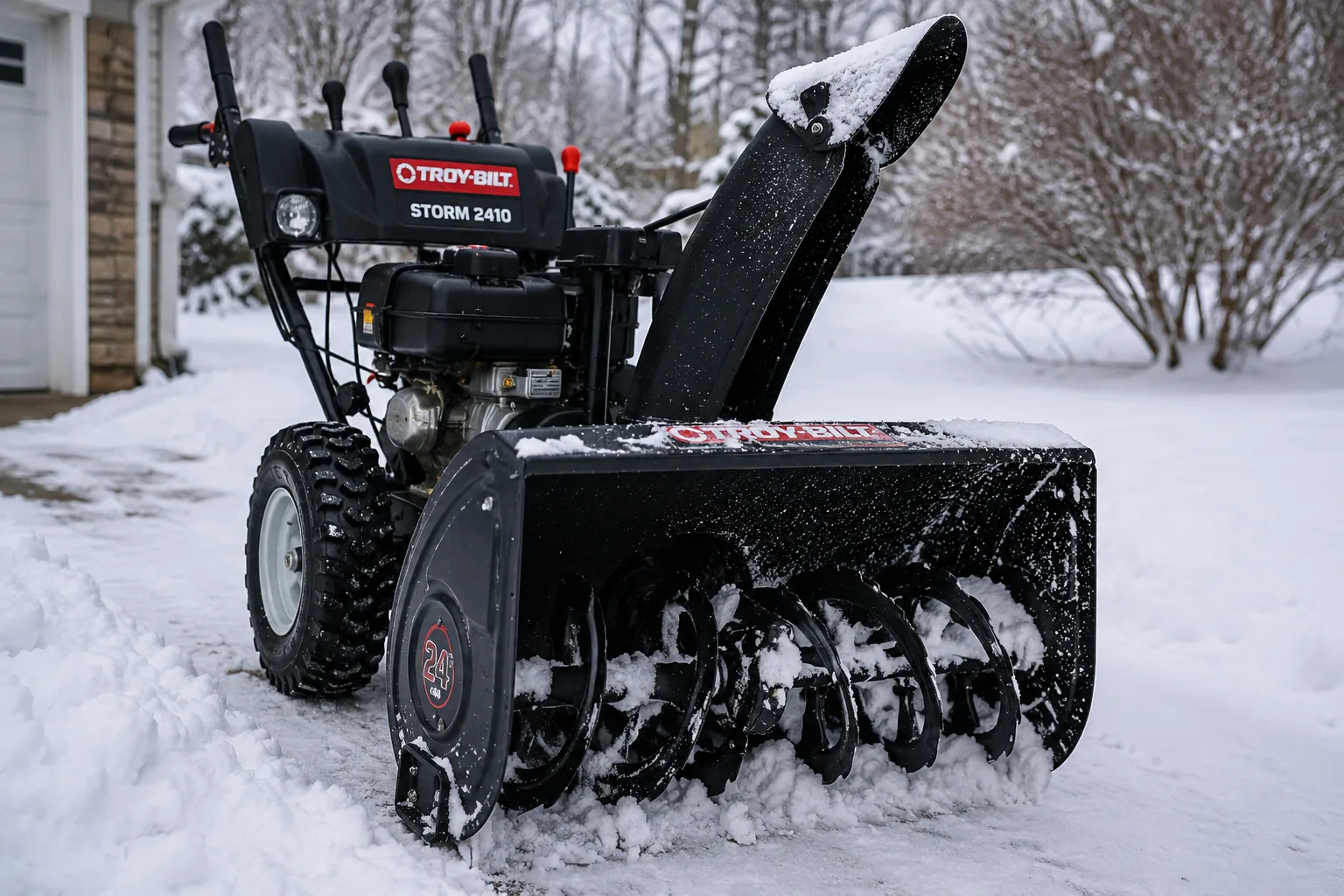
Applies to Storm 2410 family
Identifiers: Storm 2410 · 31BS6KN2766 · 31BS6BN2766 · 31AS6BN2723 · 31AS62N2766 · 31AS62N2711
Guide scope: Storm 2410 is a family name used across multiple 11-character Troy-Bilt product IDs and manual revisions. Match the Product Identification Label and engine information before applying revision-specific starting details or ordering engine parts.
Always match the 11-character product ID before ordering parts.
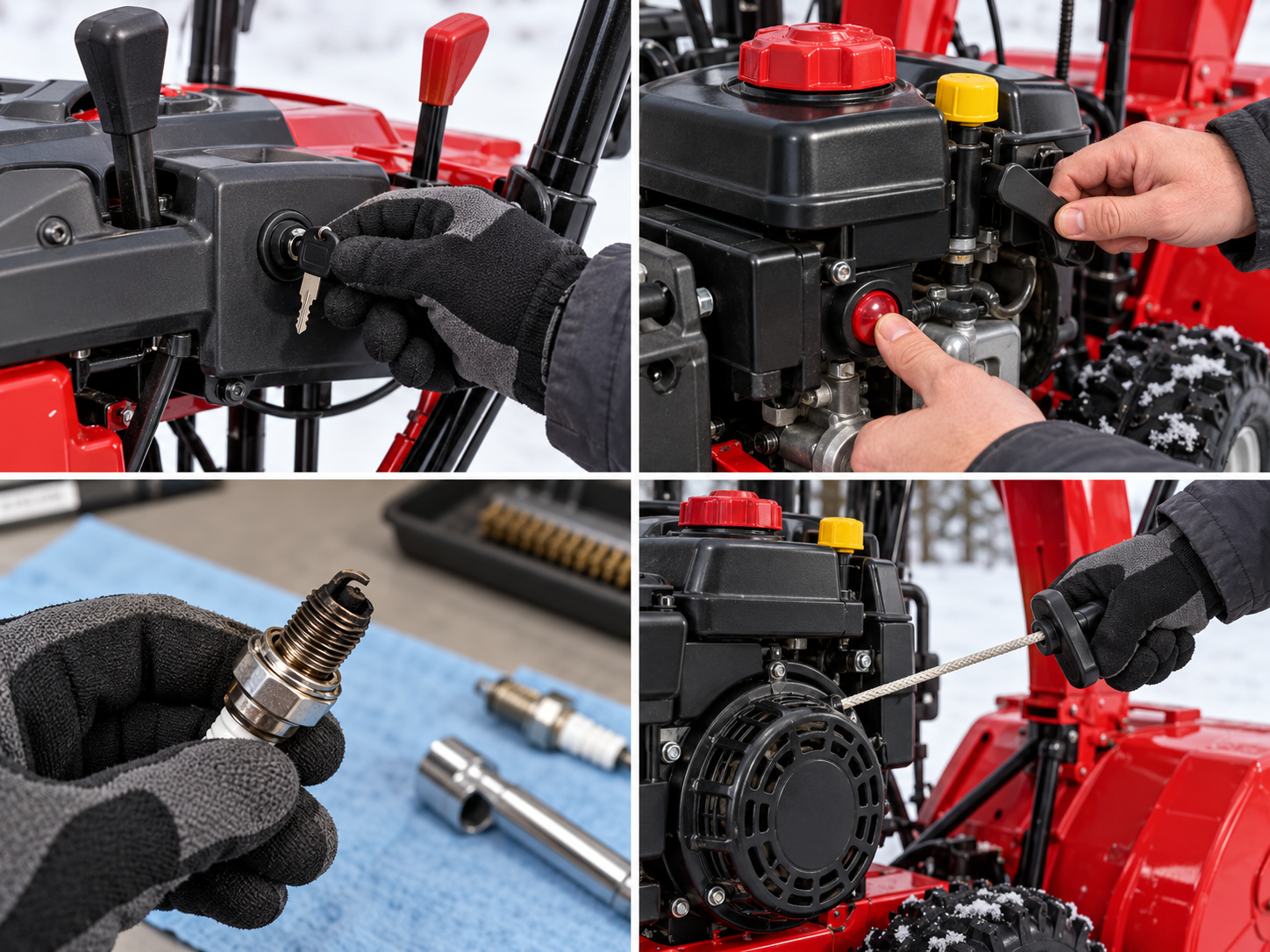
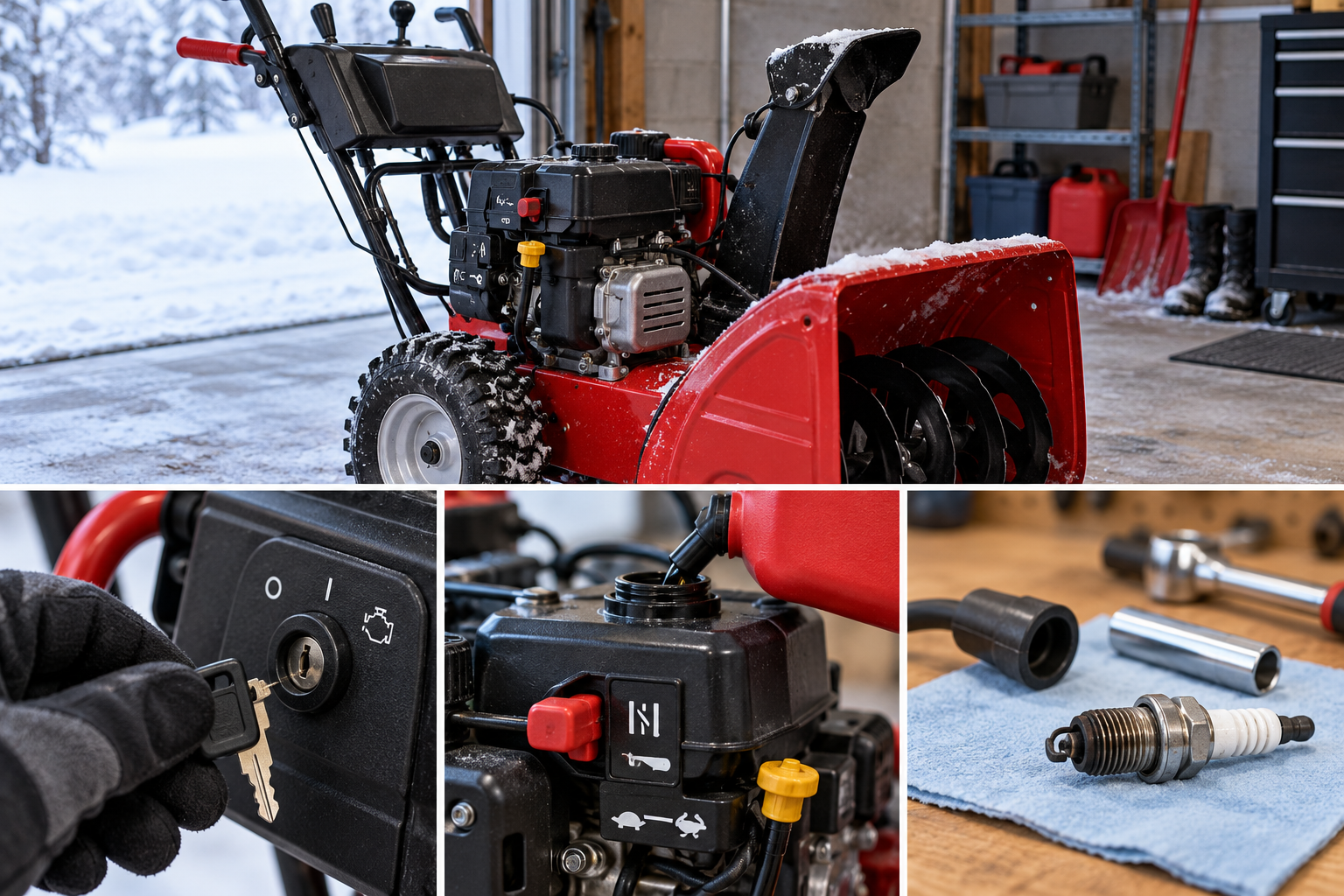
Storm 2410 manuals list choke position, spark-plug wire, fuel, priming, spark plug, ignition key and—on electric-start variants—the extension-cord connection before deeper service.
Move outdoors, release drive and auger controls, remove ignition sources from the fuel area and never service moving or hot engine parts.
Diagnostic sequence
Work in order. The early checks are intentionally low-disassembly and model-specific; stop once the symptom changes or the fault is confirmed.
Read the 11-character product ID
Why this check: Storm 2410 spans multiple production years and product IDs even when the hood name is identical.
What to do: Find the Product Identification Label and record the full 11-character model before choosing parts or manual sections.
Choke and ignition key
Why this check: The troubleshooting table lists incorrect choke position and a missing key among first no-start causes.
What to do: Set the cold-start controls according to the matched manual and insert the key fully.
Spark-plug wire
Why this check: A disconnected plug wire prevents ignition without requiring any carburetor disassembly.
What to do: With the engine safely stopped and cool, confirm the wire is seated on the plug.
Fuel quantity and age
Why this check: An empty tank or stale fuel is explicitly listed.
What to do: Use clean, fresh gasoline. If old fuel is present, service it properly rather than diluting it with a small amount of new fuel.
Priming and spark plug
Why this check: The manual lists failure to prime and a faulty plug separately.
What to do: Use the specified prime sequence; if controls/fuel are correct, inspect or service the spark plug per the engine manual.
Electric-start cord, if equipped
Why this check: Some Storm 2410 variants add the extension-cord connection as a no-start cause when the electric button is used.
What to do: Verify the approved grounded power connection before condemning the starter.
Use the last known event to choose the no-start branch
The first useful split is whether the engine never fires, fires briefly, or cranks unusually slowly. Storm 2410 family manuals cover several product IDs, so use the exact manual for controls and engine-specific service limits.
- No sound or no crankingCheck key/control position and electric-start power only on equipped variants.
- Cranks but never firesFollow the matched manual’s fuel, primer/choke, and ignition checks in sequence.
- Fires, then stopsSwitch to the run-quality branch; note choke response and duration instead of restarting from zero.
- New recoil resistance or abnormal noiseStop. Do not force the starter; investigate a possible mechanical obstruction through service.
How to read this symptom on this model
The first Storm 2410 no-start step is identification, not a carburetor. Troy-Bilt has sold the Storm 2410 name under multiple 11-character product IDs, including manufacturer support pages for 31BS6KN2766, 31BS6BN2766, 31AS6BN2723 and older 31AS62N2766-family machines. Those pages expose different manual revisions. Record the exact ID from the Product Identification Label before applying an engine procedure or ordering a starter, plug, cable or carburetor.
Once the ID is known, keep the first diagnostic pass external. The Storm 2410 troubleshooting material used by this site lists choke position, spark-plug-wire connection, fuel supply, priming, spark-plug condition, ignition key and—on electric-start variants—the extension-cord connection before deeper engine service. That order is useful precisely because none of those checks requires guessing at internal fuel-system failure.
Separate a cold no-start from a warm restart. A cold engine may require the manual-specified choke and prime sequence, while a warm engine can be flooded by repeating cold-start enrichment after every failed attempt. Record whether the machine has been sitting overnight, has just run, or has been stored for months. The same “won’t start” search phrase can represent three different starting conditions.
Fuel history deserves its own branch after seasonal storage. An empty tank is obvious, but old fuel can still look and smell usable while causing poor volatility or deposits. If the fuel has been stored through the off-season, do not simply add a small amount of fresh fuel and call the mixture new. Follow the matched engine-manual storage/fuel procedure and preserve the before/after behavior as diagnostic evidence.
The spark-plug wire is a low-cost check that is easy to skip after maintenance or transport. With the engine stopped and cool, verify the boot is fully seated before removing the plug. If the wire is connected and the external controls are correct, plug condition can be inspected under the exact engine manual. Do not hard-code a plug part or gap from another Storm 2410 generation because the family name alone is not an engine identifier.
On an electric-start machine, distinguish “starter does not crank” from “starter cranks but engine never fires.” A missing or unsuitable power connection belongs to the first pattern; choke, fuel, plug and priming belong to the second. If recoil start works while electric start does not, that is strong evidence to stay in the starting-circuit branch rather than replacing fuel-system parts.
Avoid changing several things between attempts. If you replace fuel, alter the plug, add extra primer cycles and change choke position all at once, a later successful start tells you almost nothing about the original fault. Make one correction, repeat the normal sequence, and record what changed. That approach is slower by minutes and faster by parts.
The first useful split is whether the engine turns over normally. If recoil or electric start rotates the engine but it never fires, stay with key, choke, prime, fuel and spark-plug checks from the matched Storm 2410 documentation. If the electric starter itself does not turn the engine, do not keep widening the fuel diagnosis; verify the approved power connection and starter branch instead. That distinction prevents an electrical starting complaint from being padded with carburetor work that cannot explain a starter that never cranks the engine.
Keep the 11-character product ID beside every engine observation. Troy-Bilt lists several Storm 2410 IDs and operator-manual forms under the same family name, so a precise cable, starter or service instruction must come from the manual returned for the actual label. After controls and fuel are corrected, make one clean start attempt and record whether the engine never fires, fires briefly, or runs only with choke. Those three outcomes lead to different next pages and are much more useful than simply repeating “won’t start” after each change.
Before you order parts
Before buying a carburetor or starter, photograph the 11-character product ID and engine label, note whether the complaint is cold-start, warm-restart or post-storage, and compare recoil versus electric starting if the machine has both. Those facts choose the right manual and narrow the branch before any part is ordered.
Do not order a spark plug, ignition component or carburetor from the Storm 2410 marketing name alone. Troy-Bilt’s own support pages show multiple product IDs and manual sets under that name; engine-specific parts require the matched engine identity.
If the plug wire, key, normal choke/prime sequence and fresh-fuel condition are correct yet the engine still never fires, move into the matched engine-manual/service path. Do not extend cranking or introduce starting-fluid shortcuts that are not part of the manufacturer procedure.
Back to the exact model hub →Retest without creating a second problem
After each single correction, perform one normal outdoor start attempt with both drive controls released. If the engine starts, let it stabilize using the matched warm-up procedure before loading the auger; a start that immediately dies is a different symptom and should not be counted as a complete no-start repair.
If electric start was the complaint, test the electric path and recoil path separately after the machine is safely configured. Recoil success with electric failure narrows the issue; failure by both methods keeps fuel/control/ignition conditions in play.
Document the result with the exact product ID. If the external no-start checks are exhausted and the machine still does not fire, that record gives a Troy-Bilt service provider far more useful evidence than a list of speculative parts already replaced.
Make sure this is the right symptom
If your machine is showing an adjacent symptom instead, switch paths before changing parts: runs rough or surges.
The same search phrase can lead to a different branch on another machine. Compare the nearest model-specific examples: Ariens Deluxe 24 (921069): won't start · Ariens Deluxe 24 (921069): starts hard or runs poorly.
Model-specific notes
- A Storm 2410 name alone is not a parts identifier. The same family includes multiple 11-character product IDs.
- This guide does not jump directly to a replacement carburetor because the manufacturer table lists several external checks first.
Questions people get wrong on this model
Where is the model number on a Storm 2410?
Troy-Bilt says the 11-character model is printed on the left side of the Product Identification Label. Storm 2410 spans multiple production years and product IDs even when the hood name is identical. Before buying a carburetor or starter, photograph the 11-character product ID and engine label, note whether the complaint is cold-start, warm-restart or post-storage, and compare recoil versus electric starting if the machine has both.
Why can two Storm 2410 machines need different parts?
Production-year and product-ID differences can change engine, cables and hardware even when the marketing name stays the same. Storm 2410 spans multiple production years and product IDs even when the hood name is identical. Do not order a spark plug, ignition component or carburetor from the Storm 2410 marketing name alone.
Should I use a Storm 2410 manual that matches the family name but not my 11-character product ID?
No. Storm 2410 spans multiple product IDs and manual revisions. Use the exact Product Identification Label first; family-name similarity is not enough for revision-specific start procedures, adjustments or parts. The model-specific follow-up is “Choke and ignition key.” On Storm 2410 family, keep that observation separate from any later adjustment; otherwise a working retest will not tell you which change fixed the symptom.
Primary-source trail
Manufacturer material used for this diagnosis. Verify the model/serial range before ordering parts or applying an adjustment.
Troy-Bilt Storm 2410 model support pageManufacturer model page with operator manuals, diagrams and model-number guidance.www.troybilt.com →Troy-Bilt Storm 2410 alternate model supportConfirms Storm 2410 family spans multiple 11-character model numbers.www.troybilt.com →Troy-Bilt Storm 2410 model 31BS6BN2766 supportManufacturer page confirms another Storm 2410 11-character model and exposes matched manuals.www.troybilt.com →