Toro 721 E 38753 Rotor Blades Worn: Read the Wear-Indicator Hole
A later-generation 38753 wear-check guide that uses Toro’s blade wear-indicator hole to decide when the rotor blades and scraper have reached the replacement boundary.
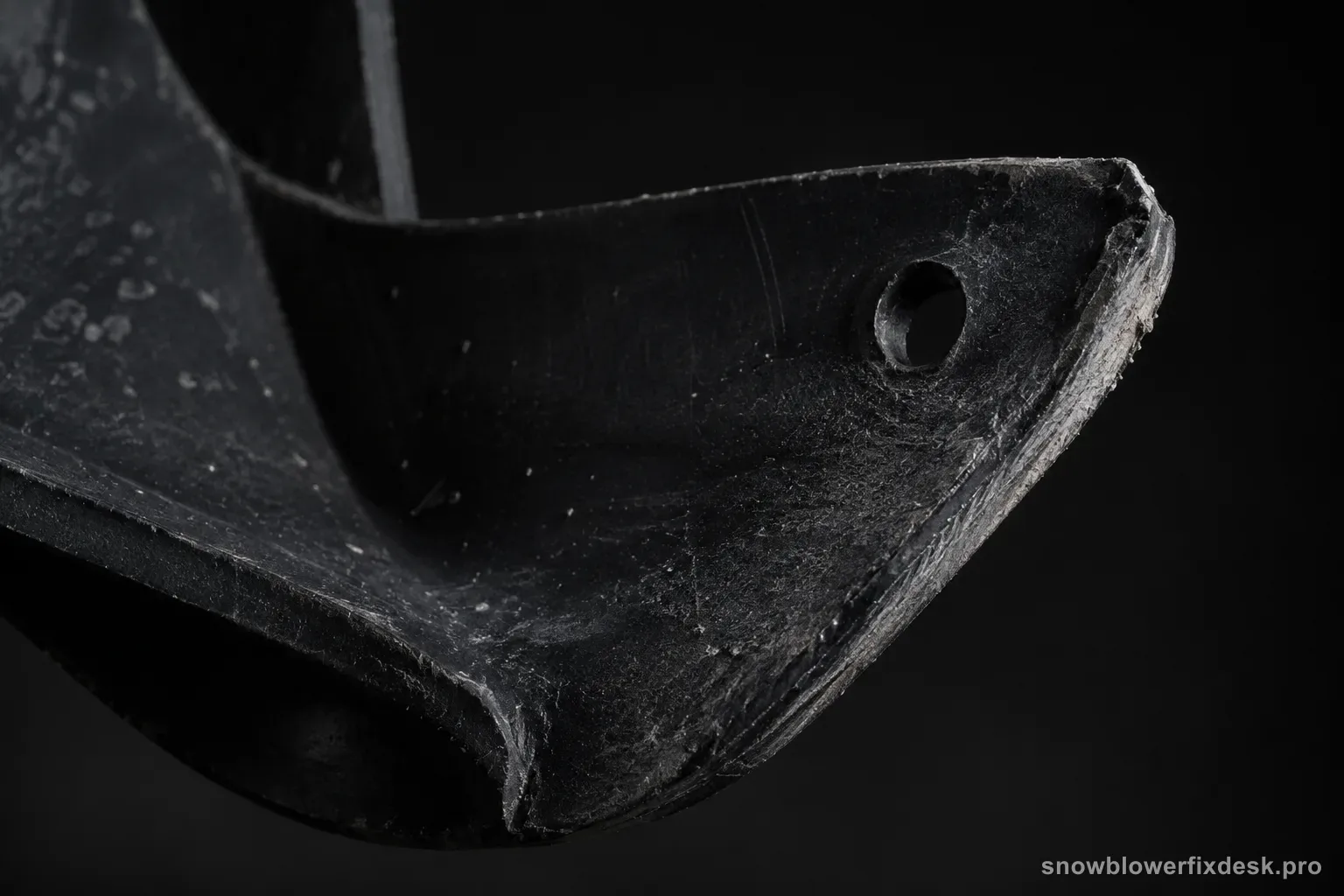
Applies to Power Clear 721 E (38753)
Identifiers: 38753 · 721 E
Engine ID: Toro 212cc
Guide scope: For the wear decision below, use Toro Power Clear 721 E model 38753 only after the serial resolves to 406836564 or later and operator manual 3439-829 Rev B. Serial 400000000–406836563 belongs to operator manual 3429-269, so older maintenance details and parts assumptions stay outside this page.
Model 38753 spans multiple serial ranges. Use the serial resolver below before assuming a manual or parts catalog.
This model has serial-range boundaries — resolve the serial before using a manual →
721 E 38753 is not the QZE 38756
This diagnosis is scoped to model 38753. The sibling 38756 is the 721 QZE and adds the Quick Shoot chute-control context, so confirm the model/serial label before using a parallel-looking QZE procedure.
Toro says to inspect the rotor blades before each session and yearly. When a rotor-blade edge has worn down to the wear-indicator hole, the current manual directs the owner to have an Authorized Service Dealer replace the rotor blades and the scraper together.
Shut off the engine, remove the key and wait for all movement to stop before inspecting the rotor blades or scraper. Do not reach into the housing while the rotor can move.
Diagnostic sequence
Work in order. The early checks are intentionally low-disassembly and model-specific; stop once the symptom changes or the fault is confirmed.
Confirm 38753 and the later serial generation
Why this check: The Power Clear 721 E name spans multiple model numbers and manual generations.
What to do: Read the frame model/serial label and use this guide only for model 38753 serial 406836564+ under manual 3439-829.
Inspect the rotor-blade edge before the next session
Why this check: Toro makes blade inspection a before-session visual check in addition to the yearly maintenance schedule.
What to do: With the machine disabled, compare the worn edge to the molded wear-indicator hole shown in the matched manual.
Use the wear hole as the decision gate
Why this check: Toro distinguishes an intact wear-indicator hole from an exposed one.
What to do: If the hole is still intact, the manual does not call for replacement on that wear criterion. If the edge has worn down to expose the hole, the replacement boundary has been reached.
Treat blades and scraper as the matched wear service
Why this check: The current manual directs replacement of the rotor blades and scraper together once the wear indicator is exposed.
What to do: Do not solve the visual wear condition by replacing one visibly worn blade while leaving the rest of the specified wear service unresolved.
Keep symptoms separate from the visual wear decision
Why this check: Weak throw or snow left behind can have other causes such as snow load, a clog, belt/control issues or operating pace.
What to do: Use the wear-indicator hole to confirm blade wear; use the separate discharge guide if the primary complaint is poor throwing and the wear boundary is not reached.
Use the current service boundary
Why this check: Toro’s later manual tells the owner to have an Authorized Service Dealer replace the rotor blades and scraper when necessary.
What to do: Carry the exact model and serial to service rather than importing a replacement procedure or part number from an older 721 E generation.
How to read this symptom on this model
Use the wear-indicator hole as the primary decision point rather than judging the rubber by age, surface scuffs or one photograph. For model 38753 serial 406836564+ under Toro manual 3439-829 Rev B, the maintenance schedule calls for rotor-blade inspection yearly, and the text tells the operator to inspect the blades before each session. That gives owners a concrete visual gate instead of a guess about how many seasons a paddle should last.
The manual illustration separates two states. If the wear-indicator hole remains intact beyond the worn edge, Toro says replacement is not required on that wear criterion. When the rotor-blade edge has worn down far enough that the wear-indicator hole is exposed at the edge, Toro directs replacement of the rotor blades and scraper. The exposed hole is therefore a boundary, not merely a cosmetic mark.
Confirm the model and serial before applying the boundary. The Power Clear 721 E name appears on multiple generations, and model 38753 itself uses an earlier operator manual below serial 406836564. The later 3439-829 branch is the one this guide describes. Do not carry a part number, procedure or wear illustration from an older 721 E listing into a current 38753 without resolving the serial first.
Keep the wear decision separate from a general weak-throw diagnosis. Worn rotor blades can be visible evidence that the wear service is due, but poor discharge can also come from a clog, frozen chute, operating too fast, a control-cable problem or drive-belt slip. If the wear hole is still intact, do not force the blade-wear conclusion simply because throwing distance feels lower than expected.
Likewise, do not use self-propel feel by itself as a wear gauge. Toro markets the 721 E with Power Propel and its operating tips acknowledge that the machine may need a forward push on slippery surfaces or in heavy snow. That operating note is not the same thing as the manual’s visual wear criterion. Use the indicator hole to decide the blade-maintenance branch.
Toro couples the rotor blades and scraper at the replacement boundary. That is important because the current manual does not frame the condition as one visibly worn paddle that should be swapped in isolation. Once the wear criterion is reached, the documented service is the blade set plus scraper, preserving the intended rotor-to-surface geometry instead of piecemeal wear correction.
The current manual also places the actual blade-and-scraper replacement with an Authorized Service Dealer. This page therefore stops at inspection and replacement decision. It does not import an older DIY paddle procedure, generic hardware torque or aftermarket part number into the later 38753 generation.
If a blade is torn, missing material, loose or damaged from an impact before the wear hole is reached, do not treat the intact indicator hole as permission to keep operating. The wear hole is a wear-life criterion, not a universal damage inspection. Sudden physical damage should be handled as a separate safety/service issue.
Treat the wear-indicator hole as a maintenance boundary, not as a catch-all explanation for clearing complaints. If the hole is exposed at the worn blade edge, the current manual’s blade-and-scraper service is justified even if the machine still throws snow. If the indicator remains intact, poor self-propel feel or weak discharge still needs its own diagnosis. A blade can also be damaged by impact before normal wear reaches the hole; torn or missing material is a separate safety/service condition. This distinction avoids using a visual wear feature to “prove” every snow-left-behind complaint and keeps the later 38753 generation from borrowing older paddle-replacement assumptions.
Before you order parts
Before buying paddles or a scraper, record model 38753 and the serial number, then photograph the wear-indicator area on both rotor blades. That evidence tells you whether the later-manual wear boundary is actually reached and prevents a retailer listing for another 721 E generation from driving the repair.
Do not order only the most visibly worn blade from symptom alone. Toro’s current later-generation manual pairs the rotor blades with the scraper when the wear indicator is exposed. Resolve the service as a matched wear condition rather than shopping by appearance.
If the complaint is weak throw but the wear indicator remains intact, use the separate discharge and belt/control guides before buying wear parts. A visual wear gate that has not been reached is evidence against making blade replacement the first diagnostic step.
Back to the exact model hub →Retest without creating a second problem
After professional replacement or other verified service, inspect that guards and the scraper area are secure before starting. From the operator position, run a brief no-load rotor engagement and confirm that release of the control bar still stops the rotor normally.
Then make a short pass in ordinary, light snow. Observe clearing and discharge without using one unusually wet or deep drift as the performance benchmark. If the machine still has weak throw, return to the discharge/drive diagnosis rather than assuming the newly serviced wear components were the only possible cause.
Continue the visual wear check before sessions and at least yearly as Toro specifies. The useful maintenance habit is not replacing paddles on a calendar; it is watching the actual wear-indicator boundary on the exact machine.
Make sure this is the right symptom
The same search phrase can lead to a different branch on another machine. Compare the nearest model-specific examples: Ariens Deluxe 24 (921069): belt squeals continuously · Toro Power Clear 721 QZE (38756): rotor keeps spinning after control bar release.
Model-specific notes
- “Paddles” is common owner language; Toro’s current manual calls these rotor blades.
- The wear-indicator hole is a replacement decision aid, not a promise that every weak-throw or self-propel complaint is caused by blade wear.
Questions people get wrong on this model
Do I replace the blades as soon as I can see the wear-indicator hole?
Toro’s criterion is that the rotor-blade edge has worn down to the wear-indicator hole so the hole is exposed at the worn edge. The manual illustration distinguishes that from an intact hole. Toro’s later manual tells the owner to have an Authorized Service Dealer replace the rotor blades and scraper when necessary.
Should I replace only the most worn paddle?
The current manual directs replacement of the rotor blades and the scraper when the wear boundary is reached; it does not present a one-blade-only wear repair. Toro’s later manual tells the owner to have an Authorized Service Dealer replace the rotor blades and scraper when necessary.
Does worn blade rubber prove why the machine leaves snow behind?
Not by itself. The wear indicator confirms the blade replacement boundary. Snow-left-behind or weak-throw symptoms still need their own clog, operating-load and drive checks. Weak throw or snow left behind can have other causes such as snow load, a clog, belt/control issues or operating pace.
Primary-source trail
Manufacturer material used for this diagnosis. Verify the model/serial range before ordering parts or applying an adjustment.
Toro Power Clear 721 Operator Manual 3439-829 Rev BOfficial current operator manual covers model 38753 serial 406836564 and up; includes the 2–3 mm control-cable gap, disengaged-cable slack requirement, rotor-blade wear indicator and blades-plus-scraper replacement boundary.www.toro.com →Toro Power Clear 721 Interactive Operator ManualOfficial interactive manual for the same later 38753 generation, with control-cable, rotor-stop, wear, fuel, starting and freeze-up guidance.manuals.toro.com →Toro 38753 Parts & Manuals — current serial rangeOfficial current-range model page confirms 38753 serial 416153644+ still uses operator manual 3439-829 / 3439-830.www.toro.com →Toro 38753 product page — serial-range resolverOfficial product page exposes the model 38753 serial-range selector so later manual coverage can be resolved before applying an adjustment or replacement decision.www.toro.com →